
Process Overload: A list of coffee processes
There has recently been an overwhelming amount of new terminology used to describe coffee processes.
This guide is meant to set the loosest of expectations for processes you may not have familiarity with, and I fully expect your experiences to deviate.
This is NOT claiming to be definitively conclusive or comprehensive; the process alone does not account for the full picture of flavor. Please do not treat it as a source of truth.
For those getting into specialty coffee, there’s a lot to learn and keep track of. Processes, varietals, region, specific farm styles; this resource aims to roughly characterize at least the first one. If you want to learn about varietals, go here.
It’s near impossible to get coffee professionals, much less entities like the SCA, to say whether or not something is tasty because it is not good for business. As someone not in industry, I’m free to share preferences in what varietals I’m optimistic or would not try again.
At the extremes, we have washed and natural, but in the 2020’s we have new processes being coined at an alarming rate and it’s hard to know what’s what. The original inspiration was Christopher Feran’s list of processes.
For some of these processes, consider them steps rather than the full scope of what occurred. For example, thermalshock can be done multiple times, kept in an anaerobic tank between rounds, and then dark room dried.
- 174 types of coffees logged in 2022
- 1,381 types of coffees logged in 2023
- 1,631 roasts as sample roaster for two roasteries in 2024
- 1,500+ roasts so far in 2025 with rarely 2-3 roasts of the same green
- Visiting the coferment kingdom
- We likely haven’t tasted together. Assume there are limits on how well you can virtually understand the preferences that shape my opinions.
- How I use certain descriptors may not be language you use; suspend disbelief that we may not be calibrated in preference or descriptive terminology.
- Again, please please please do not take this as trying to suggest the final word. Rather, it’s a starting point that you are welcome to overwrite and disregard with your own experience.
- The more your experiences deviate from mine, the more you can assume we’re anti-calibrated and/or opposing in preference; you’d at least know for yourself to safely disregard my opinions on flavor.
“Hey something’s wrong/missing!” If there’s something new or missing that you feel should be present, let me know here. Thanks in advance for helping me keep track of this craziness.
Acetic acid process
Acetic acid is added in controlled amounts to pulped cherries and agitated to promote microbial growth. Acetic flavors on their own can be considered a vinegar-ey defect, but this process aims to control that effect to enhance complexity.
Where it’s found: Colombia, notably La Palma y El Tucan and El Mirador by Elkin Guzman
Rarity: Rare
Common varietal associations: —
Further reading: Perfect Daily Grind
Robert’s opinion: I think the roast approach will make or break this. Roasted poorly, the fermentey defects are up-front and can taste like a bad natural. I have a hard time recommending this unless unless you enjoy novel fermentation flavors like orange wine.
Advanced processing
Also known as: Advanced process; Advanced fermentation; Advanced washed
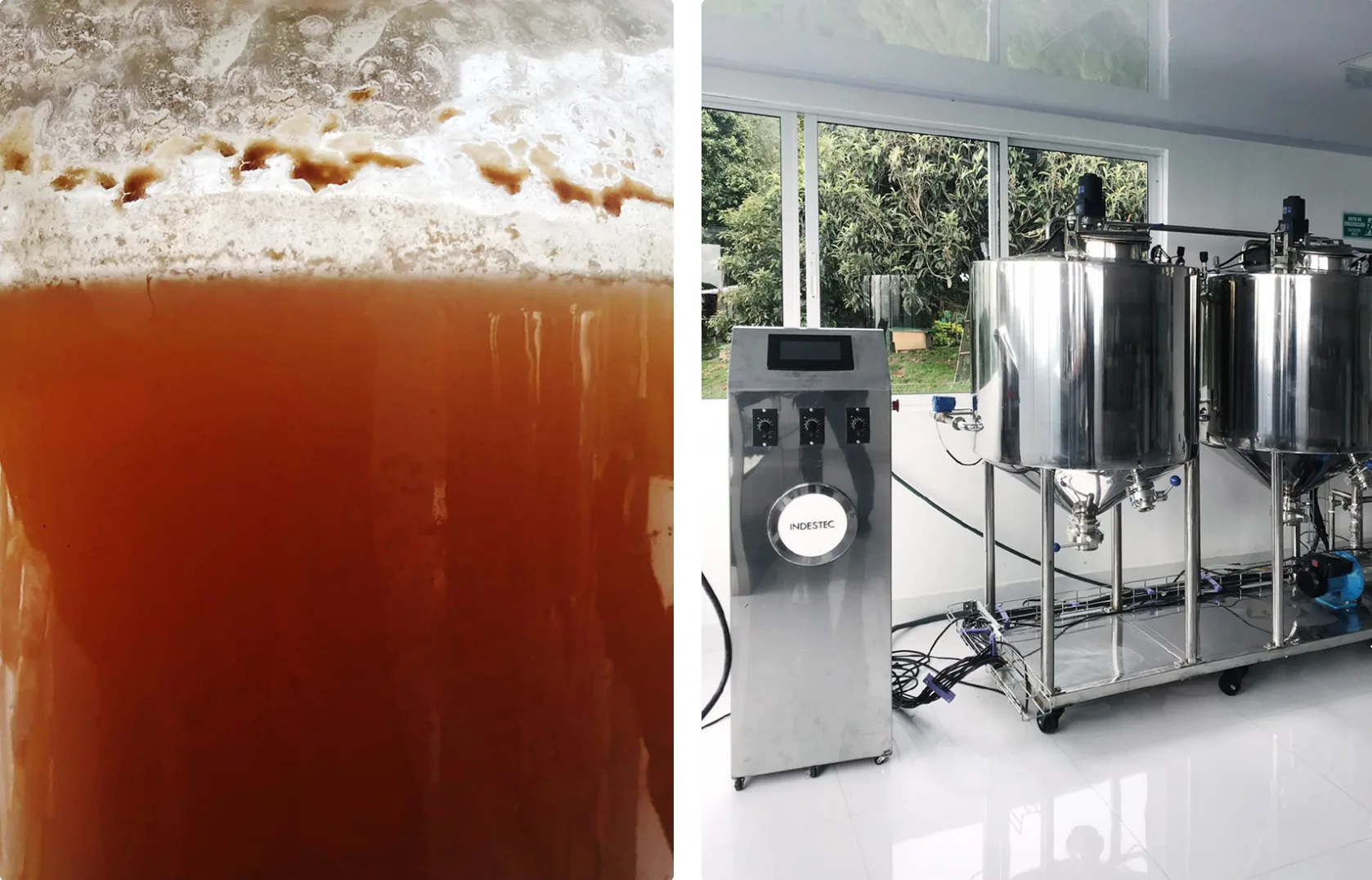
The stacked, instrumented washed protocol developed by Wilton Benitez at Granja Paraiso 92 in Cauca and since taken up by Edinson Argote, Alex Bermudez and others: ripe cherries are sterilised with ozonated water and ultraviolet light to clear the resident microbes, submerged in hot water, fermented with a chosen yeast under controlled temperature, pulped, fermented again anaerobically in their own mucilage, stopped with a thermal shock wash, and dried mechanically to a set moisture. Every individual step is already an entry in the collection - Ozone sterilized, UV sterilized, Yeast inoculation, Anaerobic fermentation, Thermalshock - which is exactly the argument for this one: the name on the bag is the name of the stack. The point of the sterilisation is control, since a cleared substrate lets the pitched strain dominate and makes the result repeatable. This is the umbrella entry for the family of named, heavily instrumented protocols; Deconstructed fermentation and Jekyll & Hyde process (JH) are filed beneath it as related named members.
Where it’s found: Colombia, mainly in Cauca and Narino. Farms include Granja Paraiso 92 (Wilton Benitez), Finca Quebraditas (Edinson Argote), La Zarza, La Soledad (Mario Gomez, not Pepe Jijon)
Rarity: Common now among roasters who buy modern Colombian lots - 136 listings as "advanced process", 19 as "advanced washed", 24 more as "advanced fermentation" - and expensive.
Common varietal associations: Gesha, Pacamara, Pink bourbon, , Sidra, Tabi, Wush Wush
Benitez also sells an "Advanced Process Decaf", which is this stack with an ethyl acetate decaffeination after it. Listings often print two or three of the constituent steps in the same process field, which is how the queue ended up with Sterilized and High Intervention as separate values.
Further reading: https://uncommonams.com/products/wilton-benitez-colombia-advanced-washed-tabi; https://tanat.coffee/boutique/colombia-zarza-pacamara-a; https://suedseite.coffee/products/alex-bermudez-kolumbien
Deconstructed fermentation
Also known as: “Illegal” processing, lychee process
Yeasts and microbes from coffee are selected for their sensory qualities and added to a starter culture mixed into the fermentation process. Finished as a thermalshock, it is technically washed, though the wild, intense flavors do not suggest this at all, creating a sense of distrust among purists. It gained its 'illegal' title due to controversy in being accused of fakery.
Where it’s found: Colombia. Notably, Diego Bermudez of Finca Paraiso in Colombia
Rarity: Common, but not necessarily by the name in the section header, instead something like "double anaerobic thermalshock lychee process"
Common varietal associations: castillo, gesha
Further reading: Barista Hustle; Chris Feran list of processes; BeanSceneMag
Robert’s opinion: I personally have not seen this label make its way onto bags, but referred to by its steps, such as "double anaerobic thermalshock", which sounds absolutely arcane the first time you see it on a bag.
Jekyll & Hyde process (JH)
Also known as: JH; Jekyll and Hyde process
An experimental process termed by Jake Hu of Taster’s Coffee. Mossto yeasts and bacteria are inoculated and recirculated.
Where it’s found: Farms that collaborate with Jake Hu of Taster’s Coffee
Rarity: Rare
Common varietal associations: None in particular
The name is presumably about the two faces of one microbial population. No listing explains the reference, so the entry should not assert one.
Aerobic fermentation
Also known as: Oxidator, Oxidation, Oxidized, SyOxidator, TyOxidator
A bit of a misnomer since fermentation is inherently anaerobic. It's often not the whole process, but one of the steps where the coffee is deliberately left out for a certain amount of time to strategically influence the overall process. For example, the oxidator processing step at Finca Soledad in Ecuador is a 48hr oxidation phase followed by a 48hr fermentation in mucilage, followed by drying in an air conditioned dark room.
Where it’s found: Colombia, Ecuador, Panama
Rarity: Probably common as a step, but not so common as a label on the bag
Common varietal associations: gesha, pink bourbon, sidra
Further reading: Lucia Solis podcast
Robert’s opinion: The effects are not straightforward by itself since it's likely much else is being done, I'd never know by taste whether there was an aerobic step involved.
Alchemy
Not much detail is available for this process, but appears to utilize a carbonic maceration phase and controlled drying.
Where it’s found: Yemen via Qima coffee
Rarity: Very rare, very expensive
Common varietal associations: Yemenia
From Qima: The Alchemy series relies on a combination of pressure (up to 10 bar/145 psi), temperature control, gas regulation and managed drying, to develop a truly unique set of coffees with unparalleled flavour expression and structure. Denoted in our lot nomenclature — XI, XII and XV, among others, the Alchemy processing uses state-of-the-art equipment to minutely control variables responsible for the development of flavours through a range of fermentations, carbonic maceration and a host of drying techniques.
Robert’s opinion: Of two samples I roasted, I found them to be red-fruit forward with tropical fruits and complex finish; tastes expensive.
Amazake
Technically a koji process, involving similar steps to the creation of amazake (sweet Japanese sake) rather than its direct addition.
Where it’s found: Limited to Finca Paraiso, Colombia
Rarity: Extremely rare, there is no telling if this experimental process will continue to be produced.
Common varietal associations: castillo, gesha, margogype, pink bourbon
From Hatch: Diego and Andres were experimenting with koji but were not satisfied with the purity of the koji they obtained. So Boris reached out to @christopherferan who designed a coffee fermentation protocol similar to the making of amazake, for the source of high quality koji spores. At last, koji spores were sourced from Higuchi Matsunosuke Shoten in Japan and sent to Finca El Paraiso. Koji spores (Type BF-3) were cultivated on a mixture of rice and coffee pulp for 72 hours. Afterwards, the coffee was submerged in a tank with the innoculated koji and a wine yeast culture. Ultimately making coffee pulp 'wine', akin to the production of amazake. After 72 hours the coffee is mechanically dried using the Eco-Enigma machine.
Robert’s opinion: Low peak flavor intensity. Complex florality, leaning towards synthetic, citric perfumey qualities. Relatively short linger.
Anaerobic fermentation
Also known as: Anoxic, zero O2, limited O2, Low Oxygen
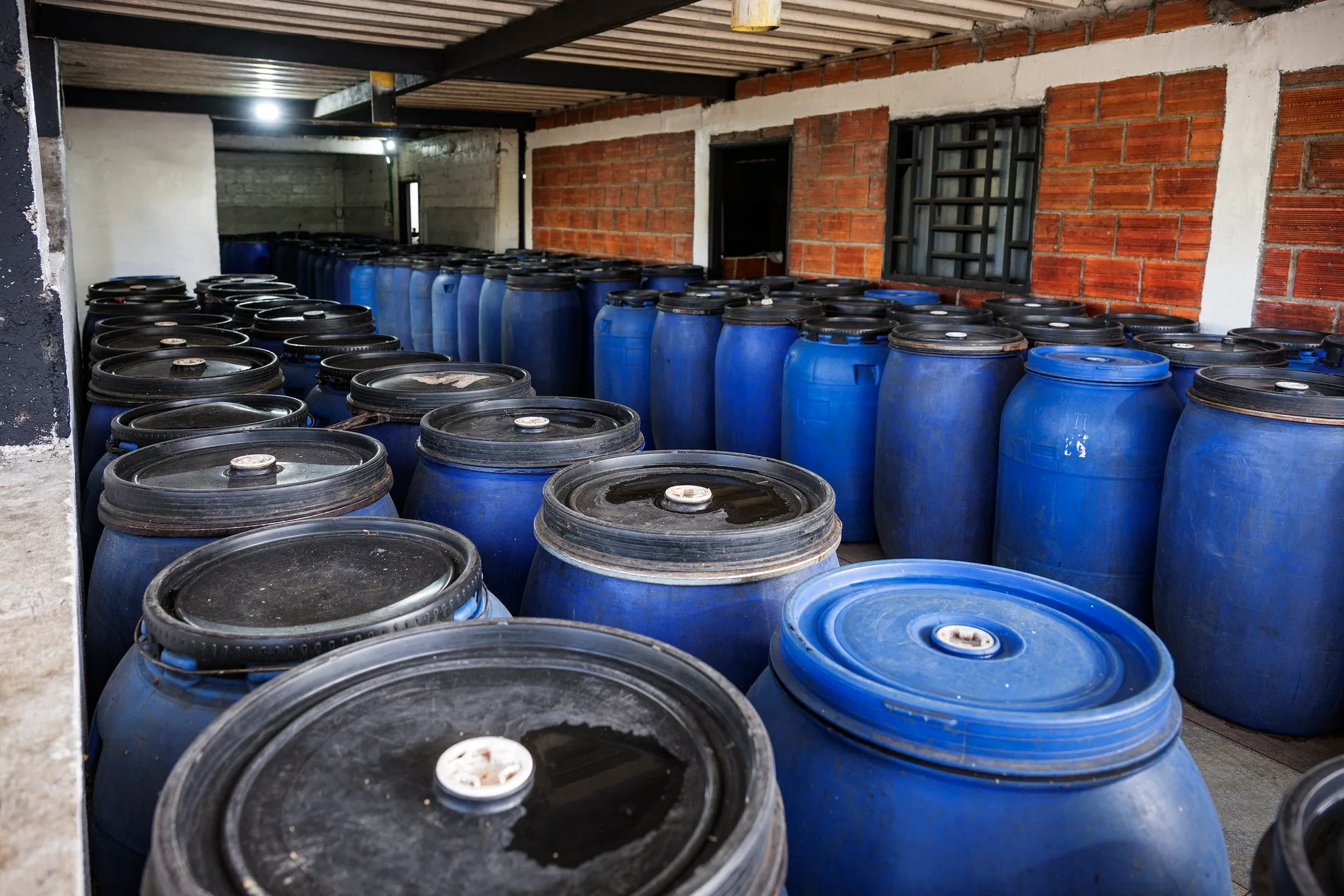
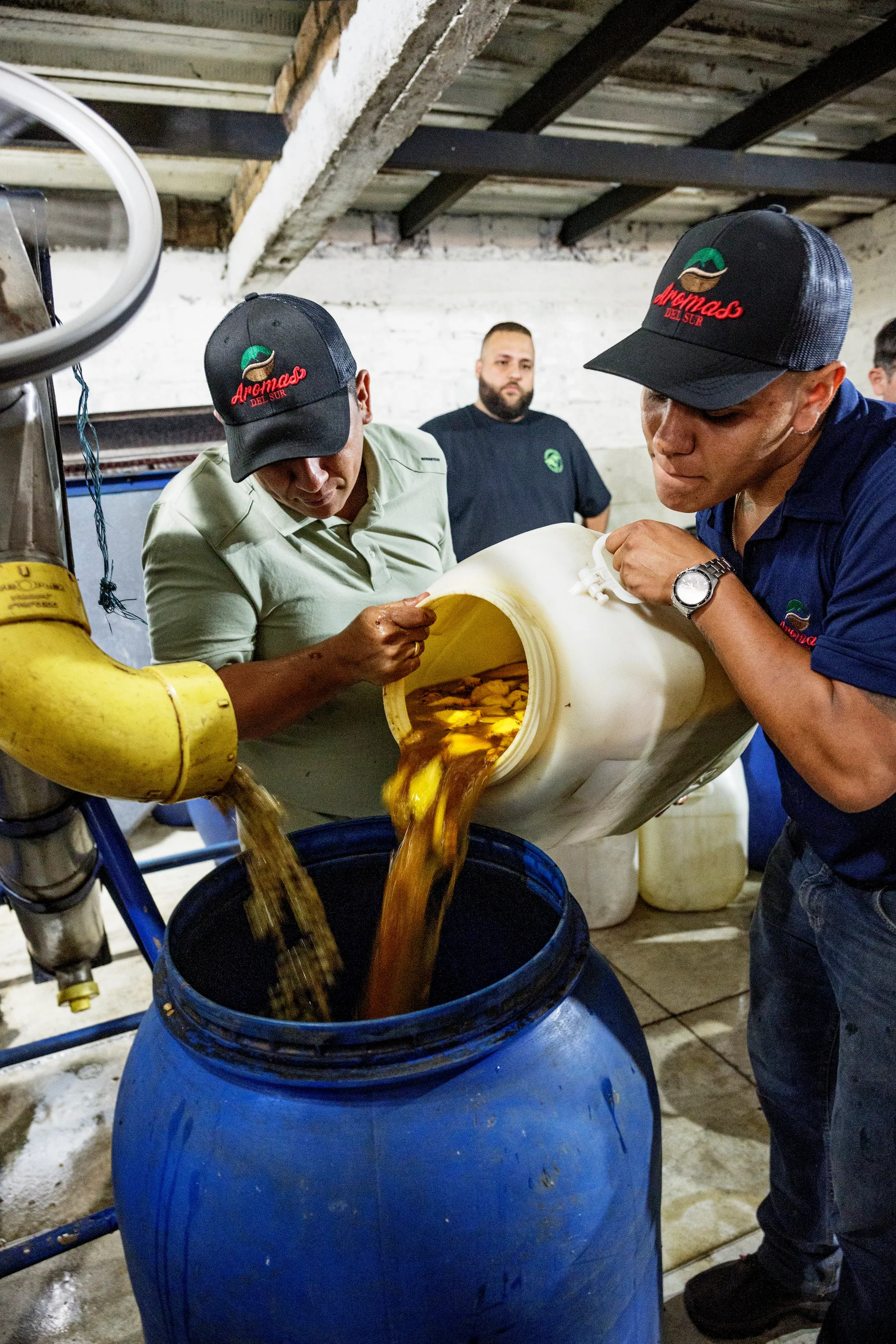
- Anaerobic, as in "without oxygen", is when the coffee is kept in a low-oxygen environment for a controlled time in sealed tanks, often in the blue barrels seen above.
- Technically, fermentations are by definition anaerobic. As Lucia Solis says in her podcast episode (https://podcasts.apple.com/us/podcast/making-coffee-with-lucia-solis/id1481293001), "Anaerobic fermentation is like saying 'wet water'".
- Anaerobic can be considered a step rather than the entire process on its own, as it can be repeated (e.g. triple anaerobic) and finished as a natural, washed, or honey.
- To create a truly oxygen-free environment is tougher than it sounds. When you see the term anaerobic, consider it more like "they sealed it off to minimize oxygen exposure".
- "Anaerobic" on the bag doesn't tell you at what point the coffee was contained in a low oxygen environment.
Anaerobic honey
Also known as: Anaerobic White Honey
Coffee cherries are pulped and held in an anaerobic environment in its mucilage. These seem to be comparatively rare, occurring occasionally in Ethiopia and Burundi.
Where it’s found: Ethiopia, Burundi
Rarity: Rare
Common varietal associations: None
Robert’s opinion: I've not handled enough of this to have a useful opinion.
Anaerobic natural
Also known as: Anoxic Dry, Dry Anaerobic, Wine Process
Cherries are fermented in an anaerobic environment such as blue plastic barrels for a certain amount of time. They're closely monitored for bacterial growth and sugar levels. Why this approach tends to be called anaerobic compared to standard fermentations, which are already anaerobic, is the intent and action of placing the fermentation in a closed environment, which yields different results. Afterwards, they are dried in cherry like a typical natural. It is possible to introduce the anaerobic fermentation stage at any point or part of another workflow of steps. Common timeframes are 72 to 100-ish hours, but experiments in 2022-2023 went as far as 720hrs (30days) all the way up to 1440hrs (60days).
Where it’s found: Increasingly common globally as protocols are better communicated. Mostly commonly, Colombia, Ethiopia, Costa Rica
Rarity: Common
Common varietal associations: Any
Robert’s opinion: The longer the stated fermentation, the more funky and fermented notes to expect. At the extremes, 360hr+, expect strong notes of heavy, winey, chemical-ey (optimistically, perfume-ey), dark chocolate notes with synthetic sweetness. Expect super long linger and red fruit notes that tastes more like red wine as the fermentation goes longer. Shorter anaerobic natural fermentations may not express this as strongly, so reserve judgment.
Anaerobic slow dry (ASD)
Also known as: ASD
A proprietary process to Elida Estate in Panama. After an anaerobic fermentation step, the cherries are dried for 30-40 days, rather than a typical 10-20 day cycle.
Where it’s found: Elida Estate, Panama
Rarity: Medium, but mostly limited to production from one farm and is quite pricey
Common varietal associations: catuai, gesha
Robert’s opinion: For a Panama offering, it's relatively strong on funk. I expect some synthetic red grape (e.g. Kyoho), red fruit, and tropical notes that can get alcoholic with more development.
Anaerobic washed
Also known as: Anoxic Wet
Cherries are fermented in an anaerobic environment such as blue plastic barrels for a certain amount of time. They may have been pulped before or after this step. Afterwards, they are washed with water to remove any remaining mucilage.
Where it’s found: Less common than its natural counterpart. Most common in Colombia, notably, from Wilder Lazo, Nestor Lazo. Also seen in Ecuador, Panama.
Rarity: Common, but less common than anaerobic natural
Common varietal associations: gesha
Robert’s opinion: This is among my personal favorite processes, as someone who enjoys Japanese candy-like synthetic sugar notes. Expectations are quite different to anaerobic naturals. Can present candy-like sugars, yellow fruits, tropical fruits, and sometimes a bit of florality.
Bag ferment (BxD)
A proprietary naming scheme from Elida Estate in Panama. Anaerobic fermentation takes place in a Grainpro Bag, for x number of Days, hence BxD
Common varietal associations: gesha
Hypoxia
Also known as: anaerobic, anoxic
The term refers to insufficient oxygen that has a downstream effect. In this context, it is functionally identical to anaerobic. It is mostly used by Coffea Circulor to refer to their natural Kenyan offerings.
Where it’s found: Kenyan offerings from Coffea Circulor
Rarity: Limited to one roaster
Common varietal associations: Batian
Further reading: Coffea Circulor explainer
Robert’s opinion: While it's just Coffea Circulor's offerings from Kenya that feature this label, I've enjoyed both I've tried. They tend to be on the muuuch funkier side but not too similar to other anaerobic naturals.
Reactor ferment (RFxD)
Also known as: Bio Reactor Washed, Bioreactor Inoculation, Fermented in Bioreactors
A proprietary naming scheme from Elida Estate in Panama. Anaerobic fermentation takes place in a Reactor, for x number of Days, hence RxD
Common varietal associations: gesha
Semi-anaerobic
Also known as: Semi anaerobic; Semi-anaerobic fermentation
Pedantically, most anaerobic fermentation is semi-anaerobic. In this context, it suggests a more open container. Cherries laid out under tarps, or lidded, but unsealed tanks. Oxygen-poor, but not oxygen-less.
Where it’s found: Panama
Rarity: Uncommon
Common varietal associations: None in particular
Sometimes means the first phase only - anaerobic in cherry, then an ordinary open ferment after pulping.
Further reading: https://tanat.coffee/boutique/gesha-village-surma-semi-anaerobic-26-e22/; https://nubra.coffee/products/panama-carlos-franceschi-lavado
Anti-maceration
A proprietary process from Diego Bermudez of Finca Paraiso which hypothesizes that suspending fermentation in a low atmospheric, vacuum environment can minimize the negative flavors from fermentation.
Where it’s found: Originally from Finca Paraiso in Colombia and Hachi Project, both by Diego Bermudez. Also seen at Ratnagiri Estate in India (https://uk.covoyacoffee.com/india-ratnagiri-vacuum-process-nano.html).
Rarity: Rare, and expensive to set up. Originally limited to production from Diego Bermudez associated farms.
Common varietal associations: caturra, cauvery, gesha, margogype, pink bourbon
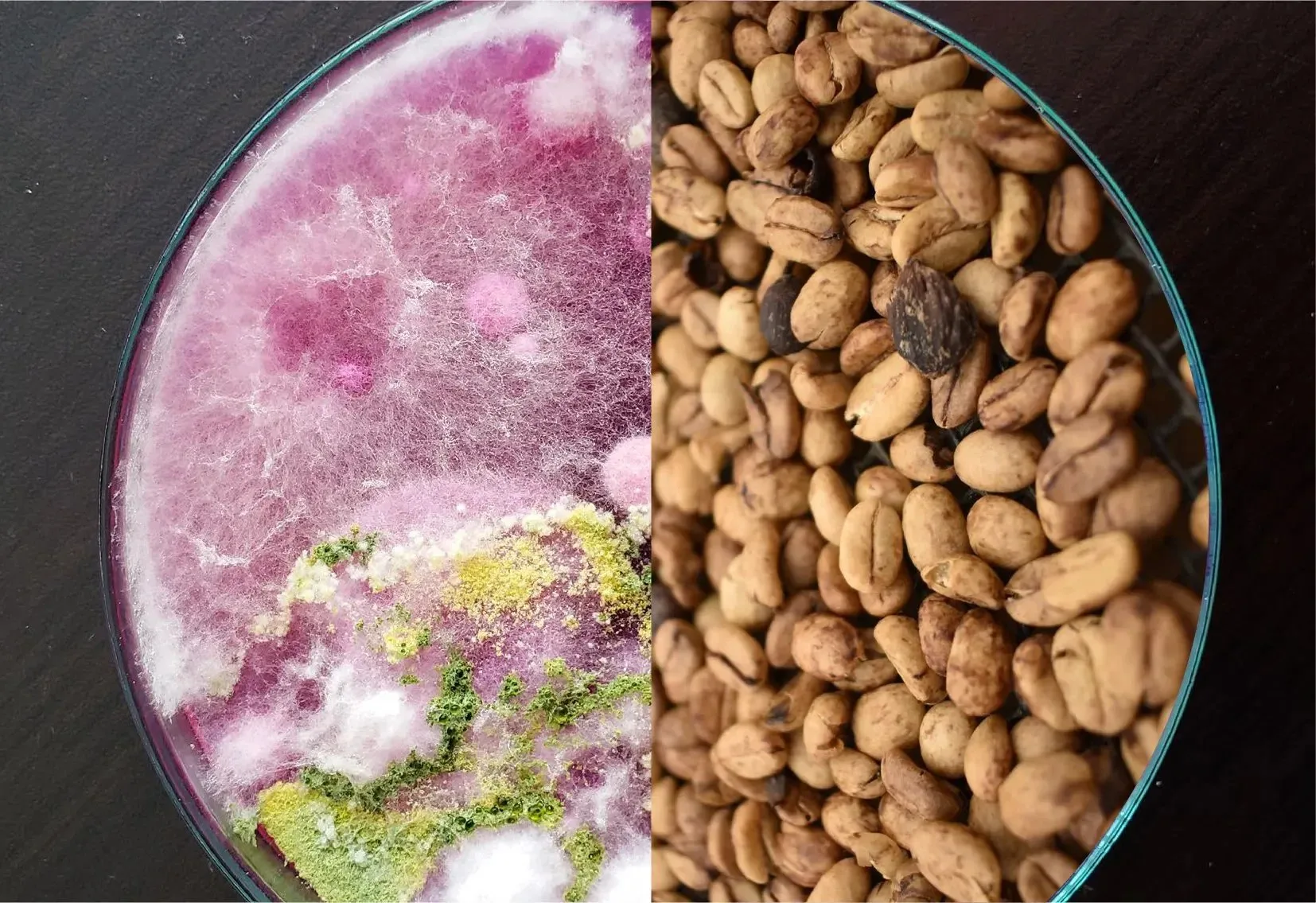
From Manhattan: The process begins with the proper harvesting of cherries at the ideal point of maturation. The cherries are then disinfected with ozone and transferred to a stainless steel vacuum chamber where it ferments for 24 hours with a culture medium, which causes a reverse osmosis reaction. The negative pressure (vacuum) and shortening of the fermentation time due to the reduction of the carbon dioxide changes the cellular morphology of the coffee by modulating the permeability of the cell membrane and increasing the performance and viability of the yeast within the fermentation process. The coffee is then dried in the "Zeodryer" machine, which uses vacuum along with a volcanic mineral called zeolite.
From Zest Coffee: A unique fermentation technique developed by Diego Bermudez. Anti-maceration differentiates itself from Carbonic Maceration, in that an anaerobic environment is achieved via vacuum (sucking the air and other gases out), as opposed to inundating the environment with carbon dioxide. By doing so, an atmospheric pressure nearing 0 kPa can be achieved, mirroring pressures in outer-space. Diego believes that by using Anti-maceration, a distinctive microbe-friendly environment is fostered, leading to the emergence of unique flavours during fermentation.
Further reading: Homegrounds post
Robert’s opinion: One of the front-runners for funkiest coffees, rivaling, if not exceeding even carbonic maceration. It's a very expensive process, so be prepared for sticker shock.
Bio-innovation
A proprietary process from La Palma y El Tucan (LPET) using low-oxygen clay pot environments to capture microbes from that batch to cultivate and culture. It is a step of processing that is inherently anaerobic and can be finished as a natural or washed.
Where it’s found: Exclusive to La Palma y El Tucan (LPET), Colombia
Rarity: None is currently in production as LPET is on a 2 year operational hiatus as of 5/2025.
Common varietal associations: castillo, gesha, pink bourbon, sidra
From Homegrounds: Over two years in the making, this new process is a novel take on the innovation in processing methods for coffee cherries. The LPET team draws samples from the fermentation stage of existing coffee processing, and further develops it to augment these coffee processing methods.
From Black & White: Bio-innovation was developed by La Palma's own Sebastian Villamizar, who was inspired by traditional wine fermentation methods. Clay pots are buried in the forest floor to control fermentation temperature.
Robert’s opinion: It's a neutral step in the end-result, I can't remember a cup I've enjoyed or disliked that I could isolate to this label.
Carbonic maceration
Also known as: CM
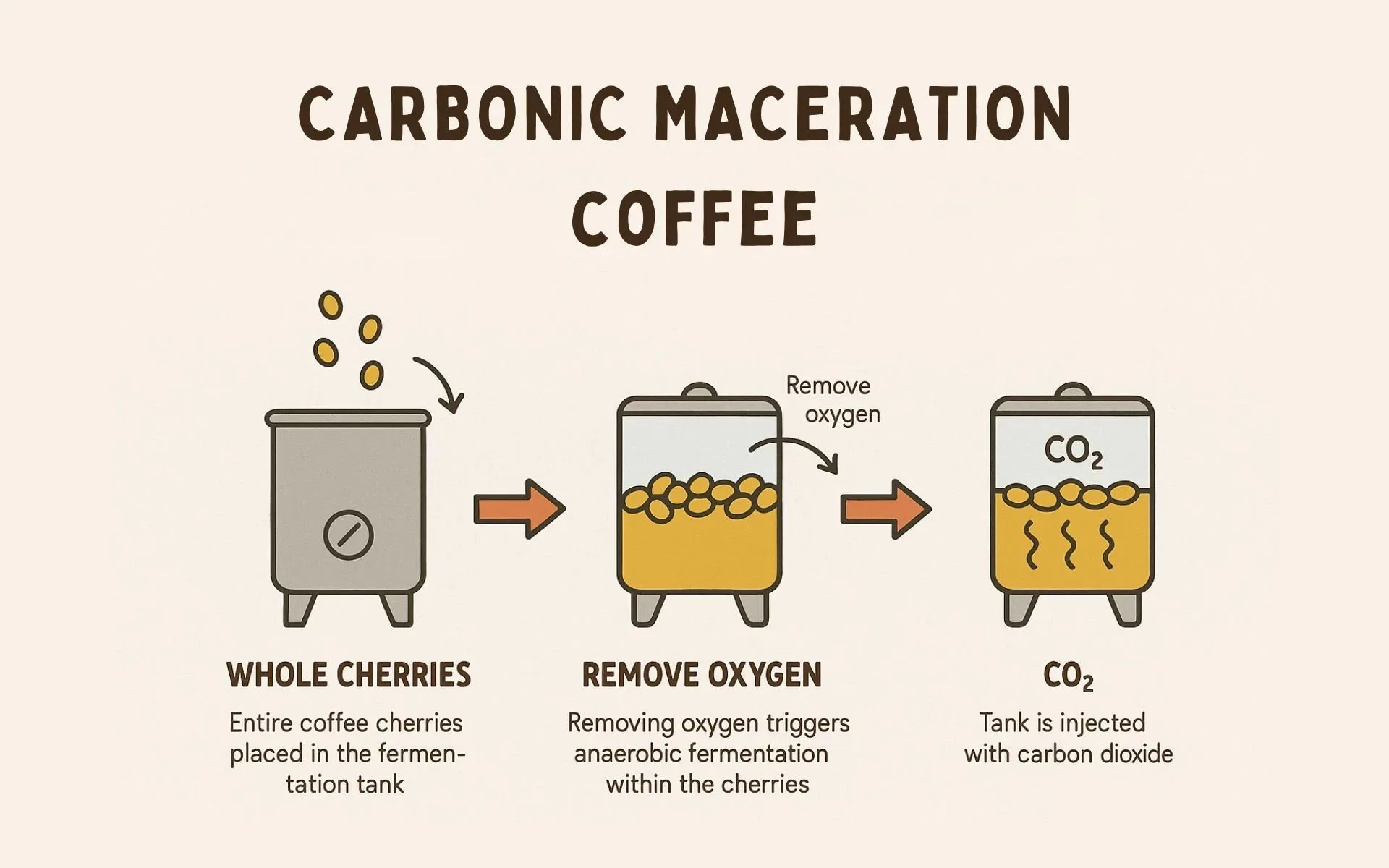
This is a process borrowed from winemaking and popularized in coffee by Sasa Sestic. Whole cherries are hermetically sealed in tanks and oxygen is flushed out with carbon dioxide in order to control the overall fermentation process.
Carbonic maceration natural
After carbonic maceration, the seeds are finished as a natural process.
Where it’s found: Colombia, Ecuador, Nicaragua, Panama
Rarity: Not too common but not particularly rare
Common varietal associations: Any
Robert’s opinion: One of the current standard-bearer for funky flavors. Consider one of these to test your tolerance for fermented notes.
Carbonic maceration washed
Also known as: Red Washed
After carbonic maceration, the seeds are finished as a washed process.
Where it’s found: Colombia, Ecuador, Panama
Rarity: Less common than its natural counterpart
Common varietal associations: Any
Robert’s opinion: This is one of those attempts at "clean funk". I think of tropical fruits without too much sugarey linger, such as kiwis.
Cascade fermentation
Also known as: Cascade; Sequential; Cascade ferment
Carrying the fermentation liquid forward from one batch to the next, so each stage begins in a medium already loaded with the metabolites of the stage before it and the microbial population accumulates rather than restarting. Hachi in Yunnan describe it as sequential fermentation that "carries active microbial metabolites between stages, allowing aromatic complexity to accumulate progressively", and the mechanical account is explicit: microorganisms metabolise the mucilage sugars, the soluble compounds are extracted, and the fermentation liquid is transferred to new batches. It is mossto recirculation generalised into a chain, and it is multi-phase by construction, so it belongs beside the double-fermentation entry as well as beside Mossto.
Where it’s found: Hachi Coffee in Colombia + Panama, and Yunnan, China
Rarity: Rare
Common varietal associations: Catimor, Gesha
The bare value "Sequential" comes off the same lots and means the same thing; it is not a separate idea.
Further reading: https://killbean.co.uk/shop/p/airworks-release-hachi-yunnan-lot-37-1-hujng; https://wes-ngopi.com/products/china-the-nest-x-hachi-c
Cherry madness
A multi-step process where after a first round of mossto anaerobic fermentation, the cherries are pulped and fresh mossto is recirculated for a second anaerobic fermentation round. The cherries are dried on African beds and moved indoors for final stabilization.
Where it’s found: From the Santaurio project, originated in Colombia and spread to Brazil, Costa Rica, and Mexico.
Rarity: Rare
Common varietal associations: —
Robert’s opinion: Red-fruit forward. Not particularly floral or complex, it's a straightforward presentation of sweet, fruity notes.
Chilled cherry
Also known as: Cold ferment/cold room ferment
Cherries are kept in a cool environment to prevent defective flavors from forming. Any process that involves chilling is complex to set up the infrastructure.
Where it’s found: CCD farms in Panama
Rarity: Rare, I have not seen it offered in recent harvests.
Common varietal associations: catuai, caturra, gesha
From Equation: After leaving the tanks, the coffee is dried with its cherry intact. This creates a sweet and fruity taste. Our wet mill is located in Dolega, a district of Chiriquí. Tanks are lined with jackets that enable the flow of cool water, so the cherries are kept at a stable, cool temperature.
Robert’s opinion: Accentuated fruit flavors in the midpalate, such as yellow fruits.
Cofermentation
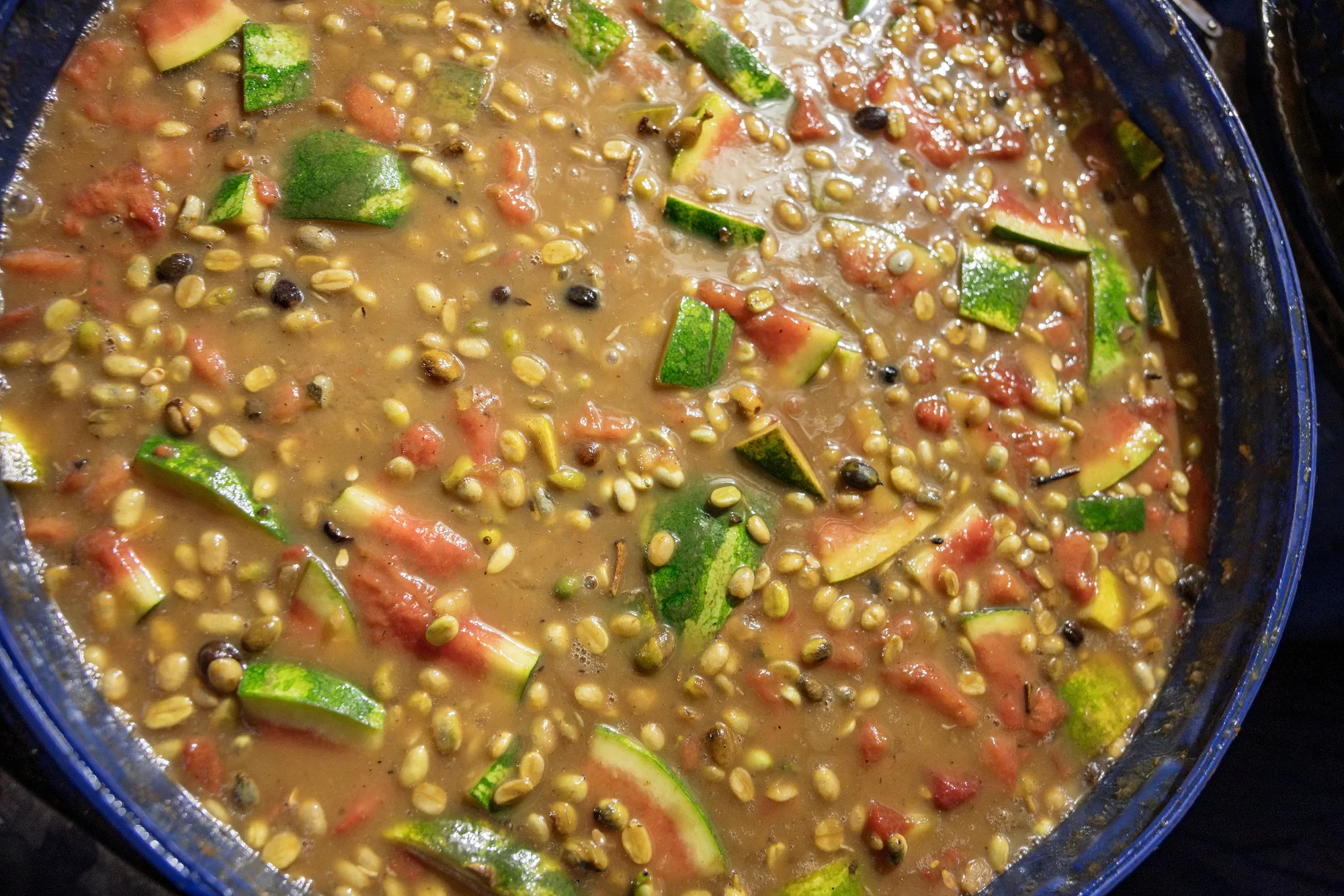
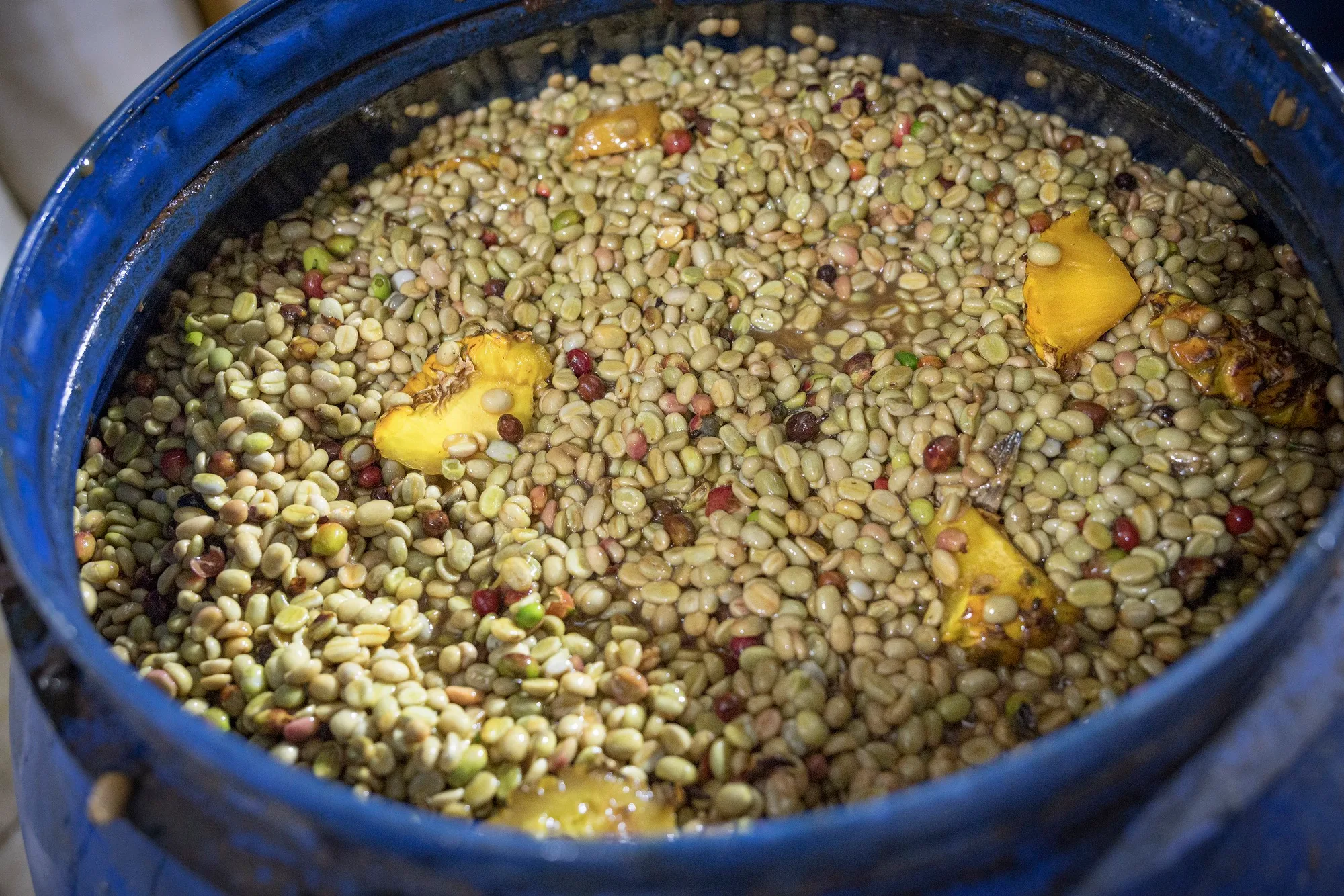
The act of adding materials, typically fruits, during some stage of fermentation. It may be literal fruit chunks, or a puree of liquified fruit mixed with acids and yeasts.
Where it’s found: Brazil, Colombia, Costa Rica, Ethiopia, Indonesia, Thailand
Rarity: Increasingly common since 2022
Common varietal associations: Any
Coferment materials: Apricot, Blackberry, Blueberry, Cannabis (allegedly), Cascade hops, Chili peppers, Cinnamon, Coconut lemonade, Durian, Galaxy hops, Grape, Grass, Green tea, Guava, IPA beer, Jasmine, Kumquat, Lavender, Lemongrass, Lychee, Mango, Mojito, Mossto, MSG, Orange/Mandarin/Tangerine, Papaya, Passionfruit, Peach, Pina colada, Pineapple, Raspberry, Sangria, Starfruit, Strawberry, Sweetsop/sugar apple, Tamarind, Watermelon/Nectar citrullus, Yogurt
Further reading: Into the Coferment Kingdom; Chris Feran blog post
Robert’s opinion: I wrote about this here (https://www.robertasami.com/coffee/into-the-coferment-kingdom)
Cold ferment
Also known as: Cold Fermented; Cold Fermentation; Cold ferment
Holding the ferment cold - typically 10-20C, in a chilled room, a water bath or a tank jacketed with cold water - so that it runs slowly and evenly instead of racing. The reasoning roasters give is control rather than flavour addition: a cold ferment suppresses the fast, heat-loving microbes that produce sharp acetic and vinegar notes, so the ferment can be run for two or three days without tipping over. It applies to either base process and bags print it both ways - "Cold Ferment Washed" and "Cold Ferment Natural" appear in almost equal numbers - which is why it is an entry of its own rather than a variant of one of them. It is the head of the collection's cold family: the page's "Cold ferment, cold press, cold room dried (CRD)" is this step plus a press and a drying regime, so it belongs beneath this entry, and Chilled cherry - keeping the fruit cold to stop defects forming - is part of the same cold-room family on the owner's ruling rather than a separate top-level idea.
Where it’s found: Colombia, Costa Rica, Ecuador, Ethiopia, Panama
Rarity: Very common - 452 listings under "cold fermented" and 67 more under "cold fermentation", which makes it the largest single value in this batch that becomes an entry.
Common varietal associations: caturra, gesha, pink bourbon, sidra
Co-occurs with Cold Room Dried 65 times, which is the page's CRD - worth cross-linking the two rather than merging them, since the ferment and the drying are separately chosen. Also appears in prose as "cold fermented in bags under flowing water for 3 days, then dried in a temperature-controlled cold room at 20C". The page currently lists "Cold ferment/cold room ferment" as a secondary name of Chilled cherry; that alias is what made this value look placed when it was not, and it should come off once this entry exists. Chilled cherry itself moves under the cold-room family on the owner's ruling of 21 August.
Cryomaceration, cold maceration
Also known as: Cold maceration
Temperature-control technique borrowed from the wine world. Unlike cold fermentation, cryomaceration involves lower temperatures before the effects of fermentation can settle in.
Where it’s found: Colombia, Guatemala in Finca Gascon
Rarity: Extremely rare as it is labor, resource, and time intensive
Common varietal associations: None in particular
Further reading: Perfect Daily Grind
Robert’s opinion: Too small of a sample size to generalize
Culturing
Refers to the use of yeast (/processes#yeast) and mossto (/processes#mossto) to create wild outcomes. It's not a technically limited or rigid definition beyond "starter cultures are involved".
Where it’s found: Can be done anywhere, but certain farms in Colombia and Indonesia use this term
Rarity: Somewhat common among roasters who tend to source modern specialty offerings.
Common varietal associations: None in particular
Robert’s opinion: Expect a similar intensity and "is this really coffee?" sensation of a coferment.
Dark room dried (DRD)
Also known as: DRD, dark room ferment, Dark Room Dried Washed
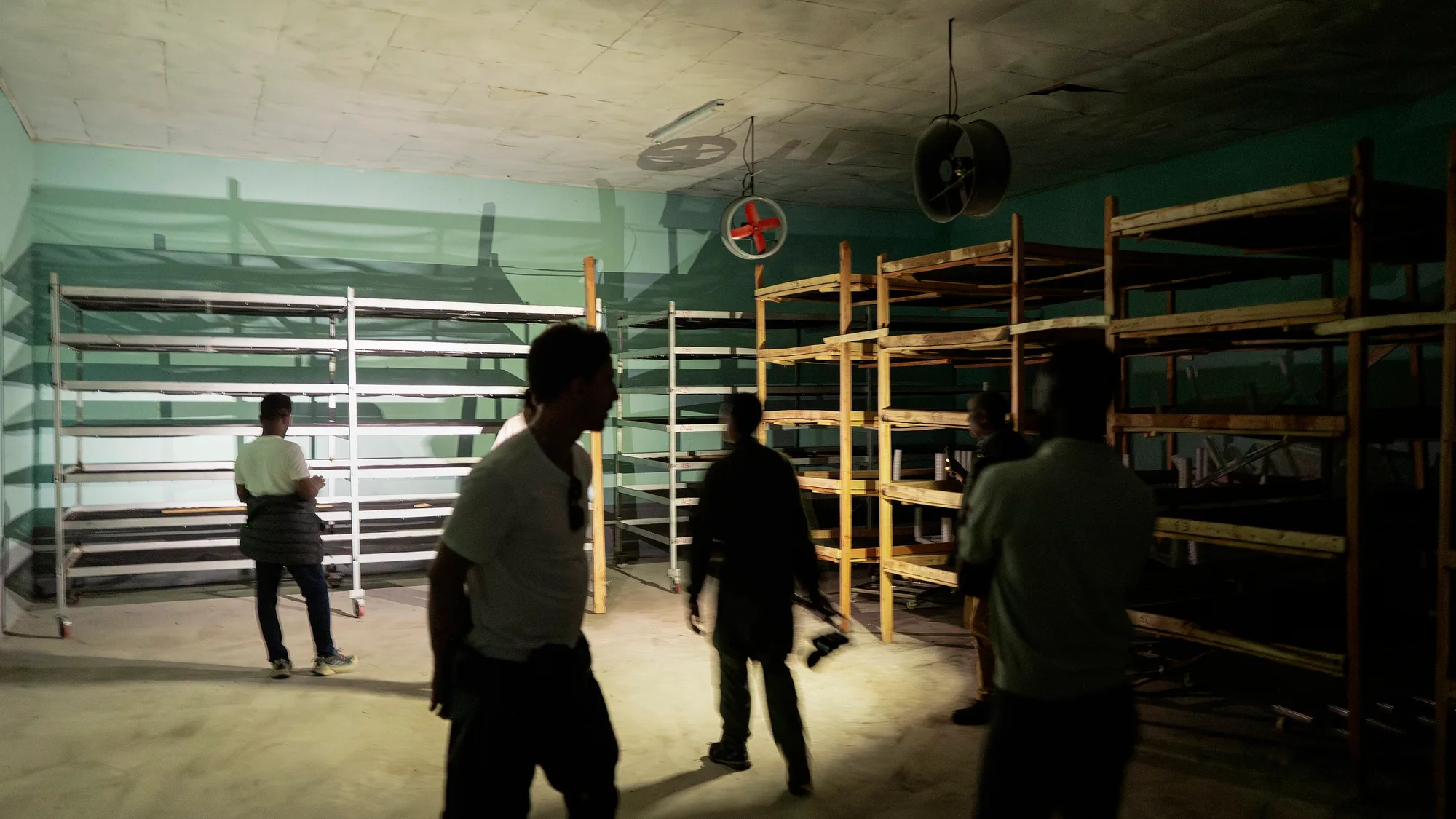
Coffee is dried on racks in a dark room. Humidity is carefully monitored and controlled as cherries release moisture into the room.
Where it’s found: Elida Estate, Hacienda Esmeralda in Panama, Finca Soledad in Ecuador. Alo in Ethiopia
Rarity: Rare. Given the limited facility space needed to perform this, it is limited in possible production volumes.
Common varietal associations: gesha
Further reading: Brian Quan at Finca Soledad
Robert’s opinion: The hit rate on this tends to be quite high.
Decaffeination
Also known as: Decaffeinated; Decaf
Removing caffeine from green coffee, always after processing and usually at a dedicated plant rather than at origin. Four families are in commercial use: solvent decaffeination with ethyl acetate, solvent decaffeination with methylene chloride, water-only decaffeination, and supercritical carbon dioxide. The distinction that matters to a drinker is which solvent and whose plant, so this entry exists to be a parent rather than a label. Ethyl acetate (EA), Mucilage EA, Carbon dioxide (CO2) and Methylene chloride sit directly beneath this entry as its methods; Sugarcane Ethyl Acetate (EA) sits beneath Ethyl acetate (EA) as the specific Colombian source of that solvent. Swiss water process (SWP) and Mountain water process (MWP) also sit directly beneath this entry - there is no generic water-process level, because water process means one of those two plants.
Where it’s found: Descamex in Mexico (MWP), CR3 and Coffein Compagnie in Germany, the Swiss Water plant in Canada, the sugarcane EA plants in Colombia, and increasingly on the farm itself - Los Nogales do their own with fermented mucilage.
Rarity: Common. Roughly 400 listings in the corpus name a decaffeination.
Common varietal associations: None in particular
323 listings say ethyl acetate without saying which kind, which is why that generic level (Ethyl acetate (EA)) has to exist as a level above Sugarcane EA - the water one does not, because a bag saying "water process" names one of two plants and the reader should be sent to both.
Further reading: Genuine Origin
Robert’s opinion: Decafs get a bad rep flavor-wise. There's some optimism that other processes applied in conjunction to decaffeination processes results in a product that masks the effect.
Carbon dioxide (CO2) decaffeination
Also known as: CO2 Decaf; Supercritical CO2; CO2 process
Decaffeination with carbon dioxide held above its critical point, where it behaves as both liquid and gas and dissolves caffeine while leaving most flavour compounds alone. Moistened green coffee is held in a pressure vessel while supercritical CO2 circulates through it and the caffeine is stripped out of the CO2 downstream. It is the most selective of the four commercial methods and the most capital-intensive, which is why it appears on supermarket decaf far more often than on specialty bags. One caution: it collides in the source data with Carbonic maceration, which also involves CO2 but is a fermentation and nothing to do with caffeine.
Where it’s found: Often not at producing origins, the process is handled in processing plants in Germany and Texas.
Rarity: Uncommon in specialty - 2 listings - but a major industrial method.
Common varietal associations: None in particular
Sometimes labelled "CO2 process" or "sparkling water process" by roasters.
Ethyl acetate (EA) decaffeination
Also known as: Ethyl acetate decaf; Ethyl acetate decaffeination; EAD; E.A. process
Decaffeination with ethyl acetate, a naturally occurring ester that selectively dissolves caffeine.
Green coffee is steamed to open the bean, washed repeatedly with the solvent, then steamed again to drive it off.
Where it’s found: Colombia or processing facilities in Germany
Rarity: The most common form of decaffeination
Common varietal associations: None in particular
Frequently printed alongside the process the coffee had before decaffeination ("Washed EA Decaf"), which is two facts about one coffee rather than a third process.
Methylene chloride decaffeination
Also known as: Methylene Chloride Decaf; DCM decaf; Direct solvent
A decaf process involving steaming and rinsing with methylene chloride. Among “bad” decafs, this is one of them.
Where it’s found: Processing facilities in Europe and America
Rarity: Common, less so in specialty
Common varietal associations: None in particular
Regulated residue limits apply; the concern is about the solvent in the plant rather than in the cup.
Robert’s opinion: Hard pass.
Mountain water process (MWP)
Also known as: MWP
A highly efficient decaffeination process using water. Similar to SWP but developed by Descamex in Mexico.
Where it’s found: Anywhere
Rarity: Common
Common varietal associations: none in particular
Further reading: 5star roasters blog
Robert’s opinion: I haven't had one I liked, this represents the decaf flavor style that overall gives it a bad reputation.
Mucilage EA
Also known as: Mucilage EA Decaf; Mucilage decaffeinated
A decaf process done at the farm rather than brought to USA or Europe to a dedicated facility. Ethyl acetate made from coffee mucilage is used in place of sugarcane as a solvent to remove caffeine. It is an incomplete process and ranges from 75-97% effectiveness.
Where it’s found: Finca Los Nogale in Colombia
Rarity: Rare, it’s uncommon to decaffeinate at origin.
Common varietal associations: caturra, typica
Sold by Blendin, Methodical and Frequent under names including "Low-Caff" and "mucilage decaffeinated".
Further reading: https://methodicalcoffee.com/collections/limited-releases/products/colombia-nogales-low-caff; https://frequentcoffee.com/products/los-nogales-caturra-decaf-coffee-mucilage-decaffeinated
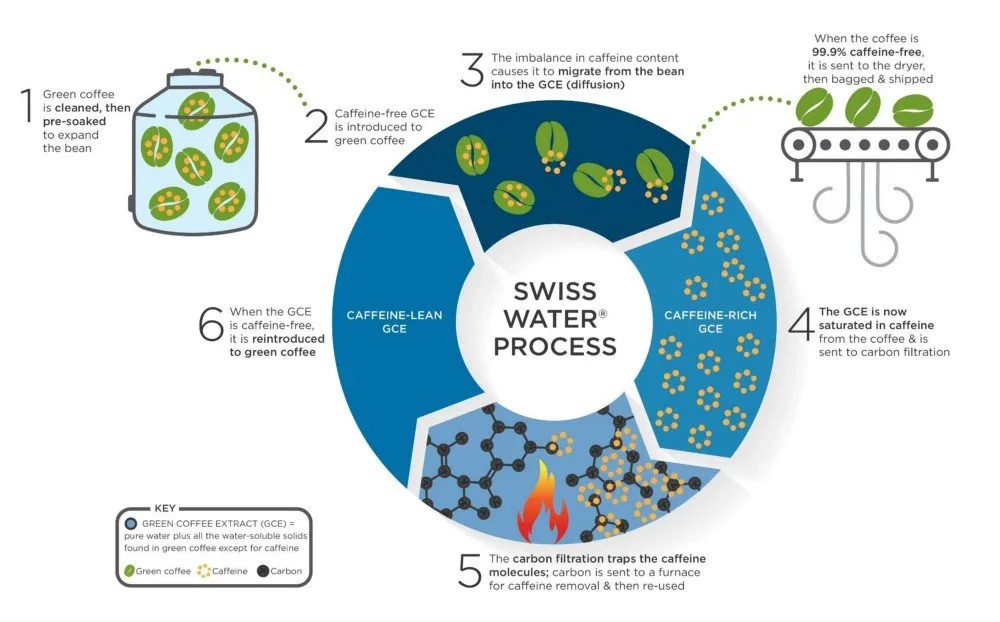
Swiss water process (SWP)
Also known as: SWP
A highly effective decaffeination process using water to remove caffeine. Swiss Water is the name of the company that originated the technology and beans would have to be sent to Switzerland for the process. Now, there is another facility in Canada.
Where it’s found: Any
Rarity: Common
Common varietal associations: none in particular
Further reading: Swiss Water
Robert’s opinion: Not optimistic in terms of flavor. Flat, chocolate, savory, cardboard-like qualities as a result of the processing.
Double fermentation (DF)
Also known as: Double Fermented Washed, Double Phase, Double Phase Fermentation, Multi-Stage Fermentation, Triple Fermentation, Triple Phase, Triple Phase Fermentation
Not necessarily a process in itself, it simply refers to two intentionally different phases of fermentation. It's possible to even have a third fermentation somewhere in the mix.
Where it’s found: Some farms in Panama use this term, but the technique is not limited to there.
Rarity: Not rare, but not often referred to by this name
Common varietal associations: The farms using this often apply this label to geshas.
Robert’s opinion: Nothing in particular obviously distinguishes it from a single fermentation.
Dynamic cherry
Anaerobic fermentation in tanks with gas release to promote yeast and lactic acid bacterial growth.
Where it’s found: Creative Coffee District farm partners in Panama
Rarity: Limited to CCD farm partners in Panama
Common varietal associations: catuai, caturra, gesha
From Equation: Dynamic Cherry undergoes an anaerobic fermentation in cherry between 72 to 96 hours in large blue tanks with air traps. This process allows the release of gases accumulated during the fermentation, which promotes the growth of yeast and lactic acid bacteria. This meticulous process produces a coffee with a profile of red fruits, silky and round body, and malic acidity.
Robert’s opinion: Despite being dynamic on the label, it's not too impactful in the cup. If roasted and brewed well, I wouldn't be able to tell it apart from a similar offering.
Echo
Also known as: Echo; Echo process
Exclusive to Jamison Savage’s Finca Deborah. Cherries are loosely depulped as a honey, and dried cascara is added back in. This could qualify as a coferment depending on your perspective. The mass is fermented in a tank with carbon dioxide, i.e. a carbonic maceration.
Where it’s found: Finca Deborah, Panama
Rarity: Rare, limited to Finca Deborah in Panama
Common varietal associations: Gesha
Coferment materials: Cascara (the coffee's own dried cherry)
Savage names his lots as well as his processes - Illumination and Elipse are lot names on the same farm, not processes - so an Echo lot may arrive with a lot name attached.
Further reading: https://www.substancecafe.com/product/panama-finca-deborah-echo-3/; https://www.leuchtfeuer.coffee/en-in/collections/alle-produkte-specialty-coffee/products/specialty-coffee-filter-coffee-panama-geisha-echo
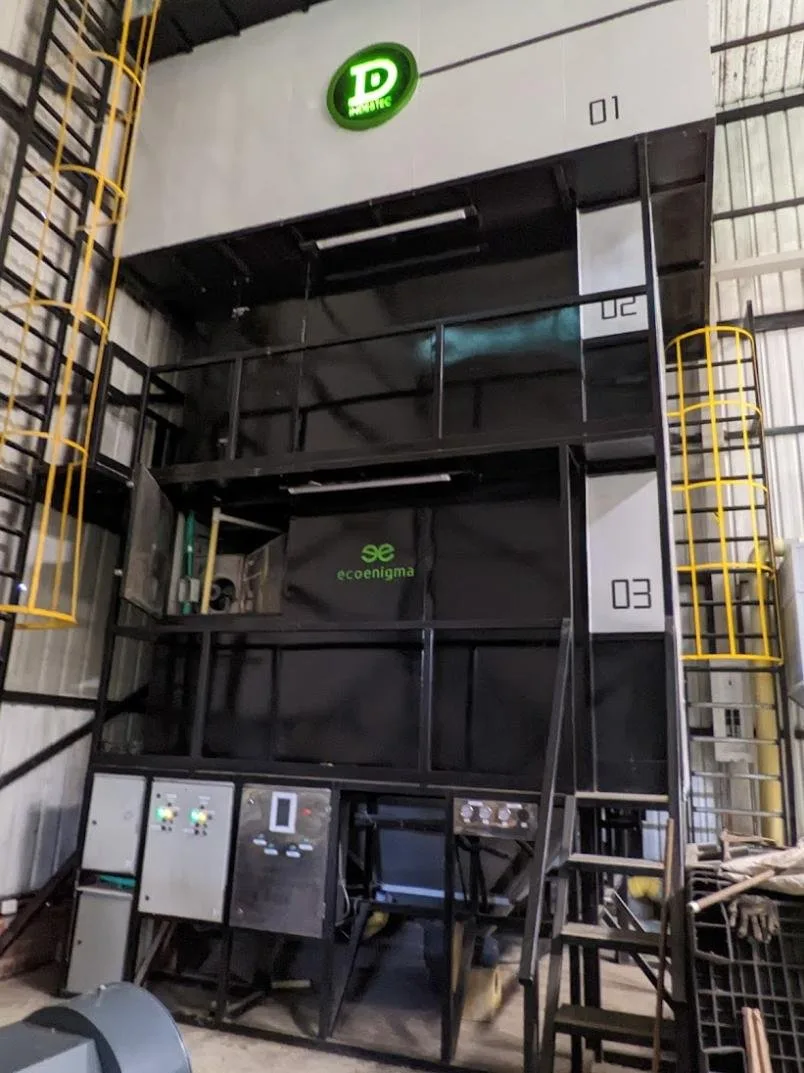
Eco-enigma
Not really a process in itself, but the name of an in-house machine used for dehumidifying/drying that has made its way onto the bag as part of the process.
Where it’s found: Cauca, Colombia with Finca Paraiso - Diego Bermudez and Granja Paraiso 92 - Wilton Benitez
Rarity: Limited to farms in Colombia with access to the machinery.
Common varietal associations: castillo, caturra
From Hatch: Enigma is a closed circuit air recirculation and temperature controlled system. It uses condensation and recirculation to minimize the environmental impact of processing while creating replicable conditions to dry coffee to between 10-11.5% humidity regardless of climate factors.
Robert’s opinion: I first encountered this coffee from Hatch's Racing Into the Night half-caf offering. Frankly, it's the boring part of the blend.

Elephant process
Kopi luwak, but with elephants. Unlike kopi luwak's controversy with animal abuse, elephants are strongly documented. Supposedly, Black Ivory coffee pays 350 THB (Thai Baht) per kilogram for picked coffee (~$11USD as of 7/2025).
Where it’s found: Exclusive to Black Ivory coffee (https://blackivorycoffee.com)
Rarity: Self-proclaimed as the world's rarest coffee, with 2025 production estimates of 225kg (495lb) of presumably green coffee.
Common varietal associations: Unlikely to be purchased for the varietal
From Hachi: cited image/product source
Robert’s opinion: Thanks Matt for giving me such a valuable bag and an even more memorable experience. Black Ivory claims inconsistent notes. Chocolate, cacao nibs, light peach, tamarind, Puer. The notion of this and kopi luwak is silly in the specialty sphere; it's safe to ignore.
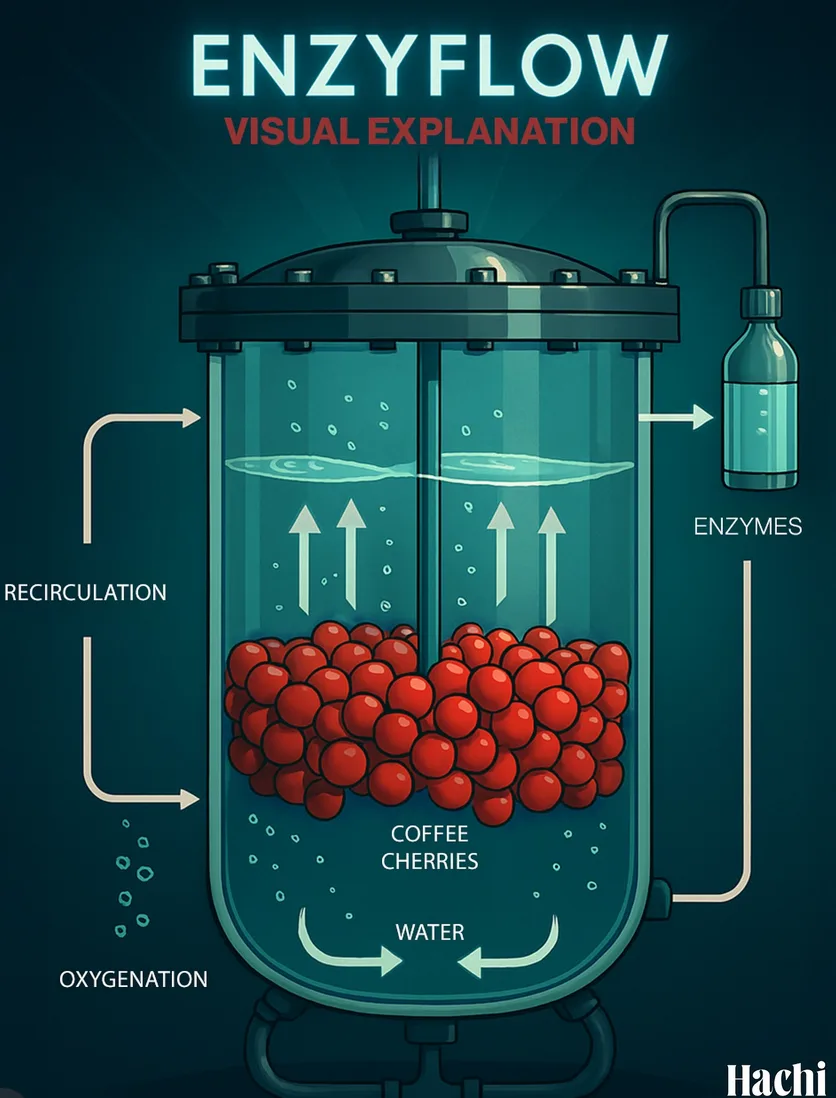
Enzyflow
Enzymes and oxygen accelerates microbial activity and minimizes defective flavors risked in extended fermentations.
Where it’s found: Exclusive to Hachi Project by Diego Bermudez
Rarity: Exclusive to Hachi project
Common varietal associations: gesha
From Hachi: Enzyflow uses enzymes + oxygen to do in 12 to 24 hours what takes days in traditional fermentation, breaking down mucilage fast, extracting bright aromatics, and unlocking the fruit's phenolic core without overripe chaos. Enzymes like pectinases, cellulases, and proteases work by breaking down the cell walls of the coffee fruit, unlocking aromatic compounds and natural sugars.
Robert’s opinion: —
Extended fermentation (EF2)
Also known as: EF2; Extended Fermentation 2
In Jairo and Felipe Arcila’s across Cofinet portfolio farms in Colombia.
An aerobic fermentation followed by a Grainpro bag anaerobic fermentation, then dried on raised beds.
Where it’s found: Limited to Cofinet portfolio farms
Rarity: Rare, limited to Cofinet portfolio farms
Common varietal associations: caturra, castillo, gesha, pink bourbon, red gesha
The cold hold during the anaerobic phase is the part roasters emphasise; it is the same reasoning as the chilled-cherry family, applied to the second stage only.
Further reading: https://www.rossocoffeeroasters.com/en-us/collections/coffee/products/upside-down-colombia; https://www.gringonordic.se/en/product/colombia-jardines-del-eden-aerobic-anaerobic-red-gesha/
Flower cultured
Possibly referring to a newer offshoot among coferments, or an approach to yeast inoculation. The approach is not consistent across the places trying it. Claimed procedures:
- Cherries are cofermented with ground up, powdered dry flowers, e.g. jasmine
- Cherries are cofermented with whole flowers
- Cherries are dried on a bed of flowers
- Yeasts are cultivated from coffee blossoms, cultured into agar, and inoculated with water into the coffee
Where it’s found: China, Colombia, Costa Rica, Indonesia
Rarity: Uncommon
Common varietal associations: None in particular
Robert’s opinion: I've only had the coferment-ish ones. It's a bit bizarre at first to experience such forced florality. It could come off soap-like or some neutral air freshener. It picks up development like a tea.
Flower touch
Natural fermentation in a stainless tank for 1 day at 9°C, followed by depulping for an additional day at 9°C. The coffee is dried in increasingly warmer drying rooms for 8 days, followed by 5 more days at 28°C.
Where it’s found: Panama, exclusively at TNT Coffee Lab in Panama
Rarity: Rare, limited to TNT Coffee Lab
Common varietal associations: Gesha
Robert’s opinion: It’s unique! Florals are presented in almost a synthetic way, while retaining some sweetness.
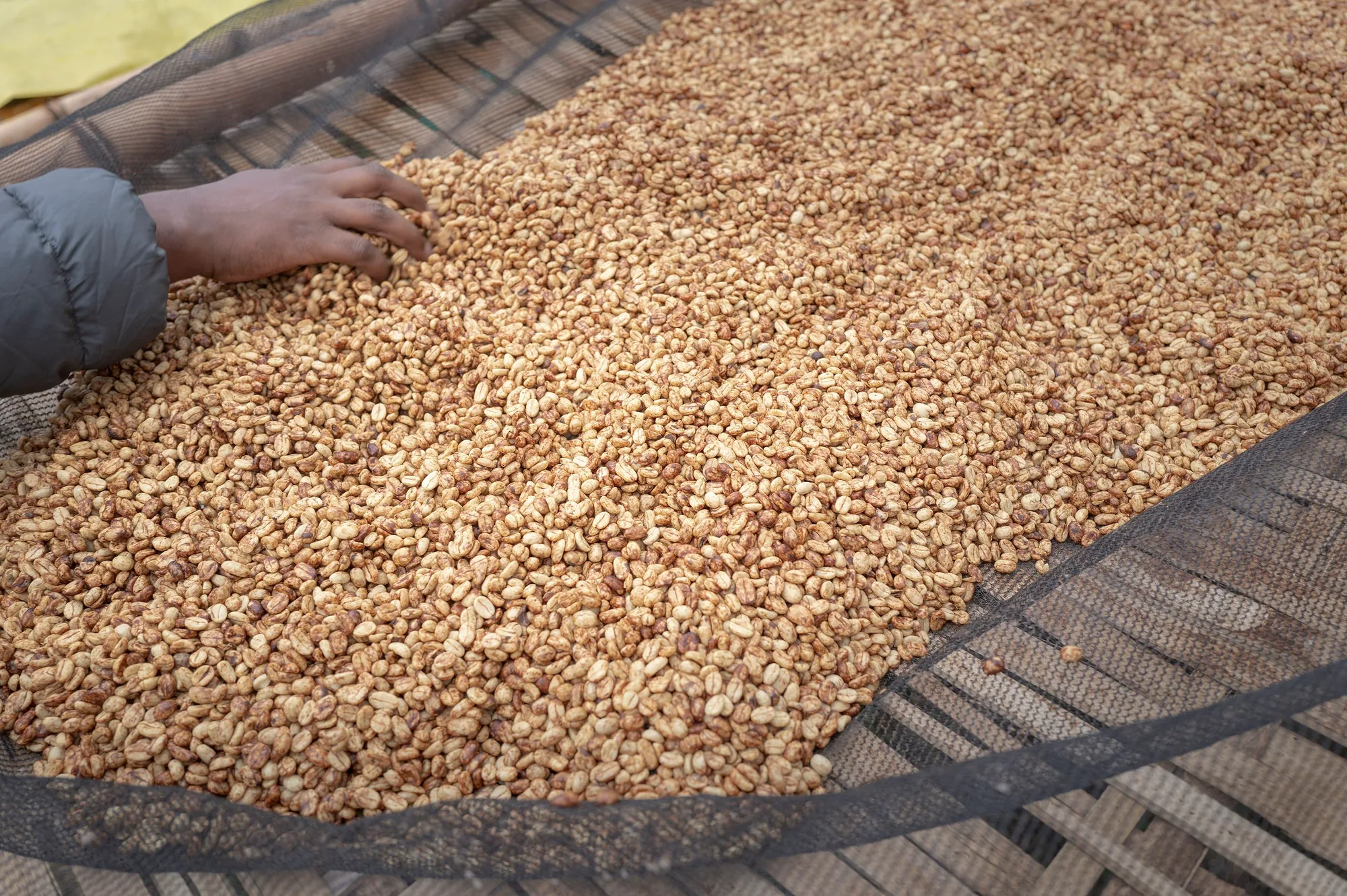
Honey
Also known as: semi-washed, Pulped Natural
The in-between on the washed-natural spectrum. Coffee cherries are depulped to a certain amount to leave a certain remaining thickness of mucilage layer. The fermentation and oxidation that happens results in a certain color from white, yellow, red, gold, purple, black (this is not standardized) that is also associated with expectations of flavor intensity. Honeys were meant to be best of washed and naturals - bright and clean while offering sweet intensity.
Where it’s found: Many countries. Traditional honey is often found in Colombia, Costa Rica, El Salvador, Ethiopia, Guatemala, Indonesia, Rwanda
Common varietal associations: Any varietal
Further reading: Perfect daily grind
Black honey
Honey process that has been extended until the mucilage is a white color. This is when the most amount of mucilage material is left on the seed.
Where it’s found: Colombia, Costa Rica, El Salvador, Ethiopia, Guatemala
Rarity: Medium, they show up here and there
Common varietal associations: Any varietal
Robert’s opinion: Expect strong funk. Black honey comes from many places across many varietals, but the common thread is they're all quite intense. Amidst strong base notes like tropical or red berries, there may be a surprising note cutting through like a brighter citrus or even banana.
Red honey
Less oxidized than black honey, you can see red splotches of color of mucilage on the seed.
Rarity: Common
Common varietal associations: Any varietal
Robert’s opinion: One of the "normal" honeys. It's sweet while avoiding overferment notes, but I personally don't find it very exciting and worth pursuing due to its middling nature.
White honey
Honey process that has been mechanically washed and leaves minimal mucilage left over a white color.
Where it’s found: Most often Colombia, notably from Finca El Placer.
Rarity: One of the less common shades of honey, I see maybe 5-8 offerings a year
Common varietal associations: Any varietal
Robert’s opinion: My preferred bag label among honey processes. Not too heavily fermented. For example, from Finca El Placer, I have expectations of intense yuzu kosho.
Hybrid washed
Also known as: Hybrid Process
Cherries are left in an aerobic environment, moved to an anaerobic environment to ferment, pulped and washed, then finished in an aerobic environment. This process has been mixed up from historical precedent as semi-washed, or honey. This refers to the process from modern farms such as CGLE in Colombia.
Where it’s found: Often Colombia, notably CGLE. Also claimed in other countries, though protocols vary along the sliding scale of being partially natural, partially washed.
Rarity: Not too rare but tends to be on the expensive side
Common varietal associations: gesha, sudan rume
From Moonwake: Following a delicate flotation process to remove lighter cherries, natural sugars are carefully monitored before beginning a layered fermentation journey. The process starts with 14 hours in open tanks, followed by an 18-hour oxygen-free fermentation in a sealed environment. Finally, the cherries undergo pulping and a refreshing 24-hour aerobic fermentation.
Further reading: XLIII blog
Robert’s opinion: This was my favorite process in 2023 and 2024. CGLE's gesha in this process carried my favorite notes - ramune, blue candy, Japanese squash car air freshener. I think of it as a premium version of anaerobic washed.
Hydro-honey
Also known as: natural hydro-honey
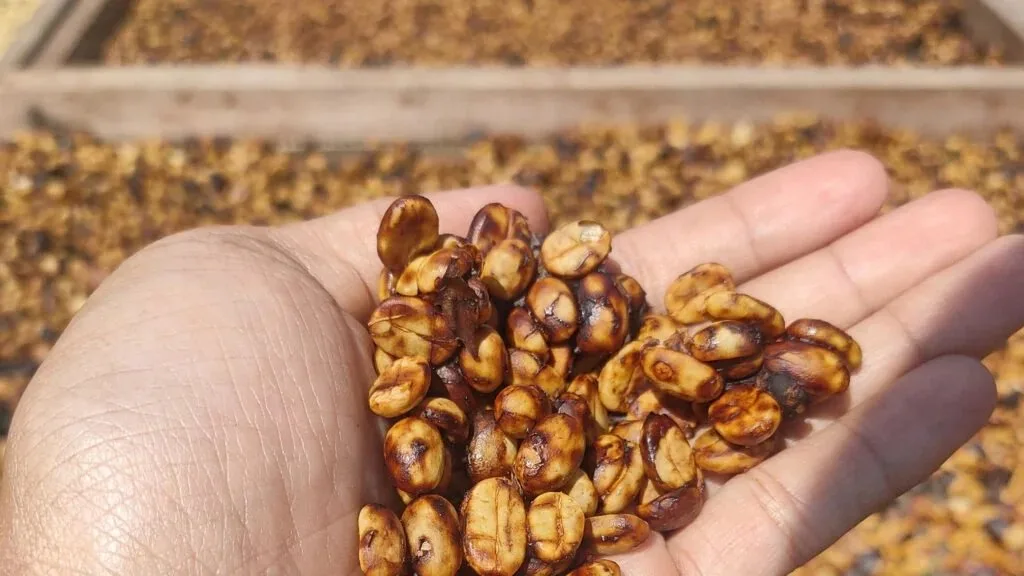
Cherries are first dried and treated like a natural, then rehydrated to swell to be pulped, then finished as a honey.
Where it’s found: Originated by Elkin Guzman in El Mirador, but it has been used in parts of Africa as a water-saving technique.
Rarity: Not too rare, it is experimented with in various regions.
Common varietal associations: tabi
From Ally: Natural Hydro Honey process begins when first the coffee is sorted by floating the cherries in water. Cherries are then dried and fermented whole for 8 days, similar to Natural processing. The dried cherries are then placed in water tanks for 36 hours to rehydrate. The coffee is then pulped and dried 20-25 days as Honey process coffee.
From Sucafina: Cherry is placed on drying beds for about 8 days. Following the drying period, the cherry is fermented in water tanks for 18 to 24 hours to rehydrate and facilitate pulping. Once pulped, coffee is laid on raised beds and dried for 25 to 30 days.
Further reading: XLIII blog
Robert’s opinion: Red fruit-forward, but slightly cleaner than comparable naturals. Which makes sense, since it's a bit of a hybrid.
Infusion
This is tricky and controversial without an agreed meaning. Interpretations:
- Colloquially, it can be a slanderous way to accuse a coffee of having 'fake' flavors, used interchangeably with cofermentation.
- There are infusions such as oak/rum barrel and cinnamon, where the intent is directly to impart the material's flavors into the coffee itself.
- Sneaky, malicious, deceptive addition of flavors where they don't belong or occur naturally.
Rarity: Not too common to find this exact word on a bag.
Common varietal associations: Any varietal
Robert’s opinion: Consider taking a moment to identify what level of technical vs. emotionally-backed definition is being discussed.
Inoculation
Also known as: Inoculated; Culture inoculated; Culture-inoculated; Bacteria inoculated; Bacteria-inoculated; Fungi inoculated; Intentional bacterial fermentation; Assisted fermentation; Induced fermentation
Intentional addition of a microorganism - bacteria, culture, yeast.
Where it’s found: Anywhere, but most common and discussed in Colombian offerings.
Rarity: Common
Common varietal associations: None in particular
Bacteria inoculated 183 listings, culture inoculated 274, fungi inoculated 7, plain inoculated 30, intentional bacterial fermentation 15, assisted fermentation 19, induced fermentation 8. Where the prose does name the organism it is usually lactic bacteria or a commercial yeast, so most of these would eventually resolve to an existing child - but the value on the bag does not say so, and the collection has nowhere to put a bag that does not.
Robert’s opinion: The intent really matters to have a productive discussion. I've roasted plenty of yeast inoculated coffees from Africa that weren't intended to be flavoring, and you wouldn't know human-added yeasts were there unless you read it on the bag. On the other hand, yeasts can result in ridiculous coffee flavors that immediately raise the eyebrows of even non-specialty coffee drinkers.
Yeast inoculation
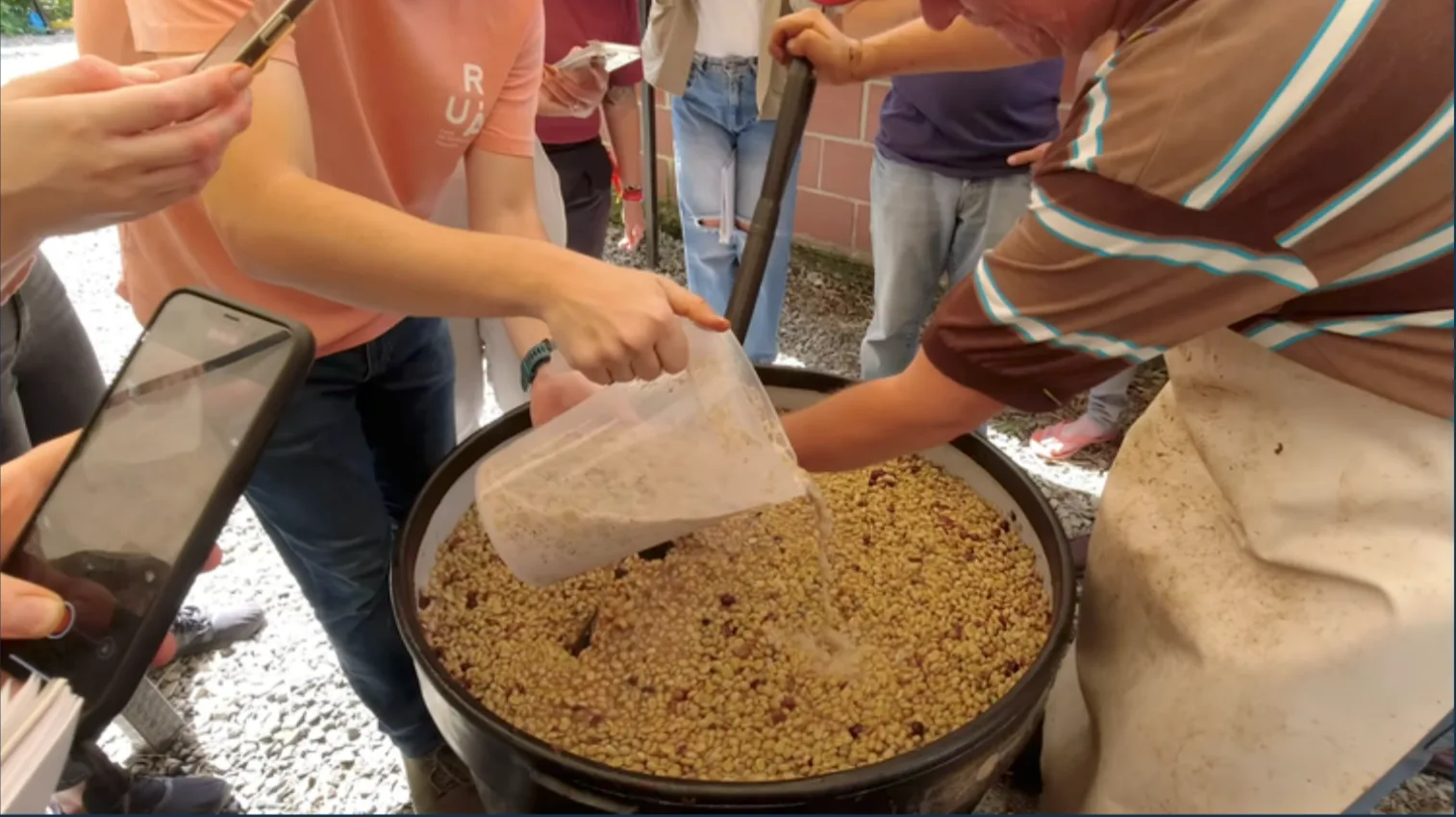
Like infusions, this is controversial. Fundamentally, specific yeasts are added to control an outcome. There are two ways to think about this:
- Certain yeasts such as saccharomyces cerevisiae used for millenia in winemaking, baking, and other culinary domains can augment and homogenize even fermentation, leading to a more consistent production yield.
- Isolating specific yeasts can add a desired flavor impact to create flavors that may not have otherwise been there. Famous producers such as Diego Bermudez point to this for how he achieved new flavors without the use of cofermentation or infusion, taken further in places like Yunnan, China, where yeast washed catimors smell more like synthetic peach candy than coffee.
Where it’s found: Everywhere
Rarity: Increasingly common
Common varietal associations: Any
Further reading: RoasterKat video; Lucia Solis Podcast; Chris Feran blog; Barista Hustle
Robert’s opinion: The intent really matters to have a productive discussion. I've roasted plenty of yeast inoculated coffees from Africa that weren't intended to be flavoring, and you wouldn't know human-added yeasts were there unless you read it on the bag. On the other hand, yeasts can result in ridiculous coffee flavors that immediately raise the eyebrows of even non-specialty coffee drinkers.
Intrinsic cherry
Fermentation is monitored and controlled in aerobic environments to minimize undesirable qualities in a short time while achieving the desired effects.
Where it’s found: Panama, notably CCD farms
Rarity: Rare, limited in distribution
Common varietal associations: catuai, caturra, gesha
From Equation: Intrinsic Cherry is a natural coffee that undergoes a short fermentation process. After floating the cherries, the coffee is left to ferment overnight in aerobic conditions, then dried.
From Black&White: This method features the lowest fermentation level coming out of CCD's wet mill. After being handpicked, the cherries are floated, stabilized, then go through two rounds of fermentation: a 32-hour anaerobic fermentation followed by a shorter mucilage fermentation, then slow-dried on patios for up to 20 days.
From Standout: They ferment the cherry in the very same bag that the coffee came in, maintaining the process and essence of each micro-lot.
Robert’s opinion: This is not a process I feel like I'm tasting up-front, unlike say, a thermalshock. It remains within the standard realm and expectations of naturals.
Koji
Also known as: Koji “supernatural”
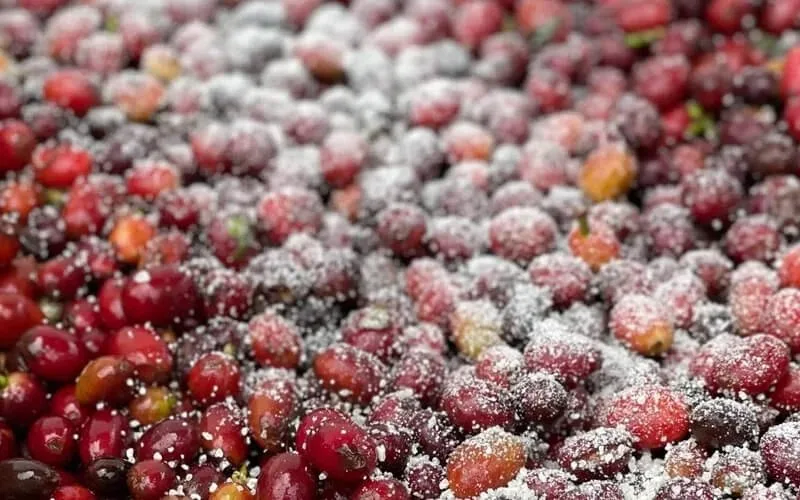
Koji is the Japanese term for the mold spore aspergillus oryzae, which is used for miso, soy sauce, and sake production. It has entered coffee as a fermentation agent and garnered attention in the early 2020's. Due to its relatively "powerful" potency, it gets termed supernatural.
Where it’s found: Colombia, Indonesia
Rarity: Popular in early 2020's, decreasingly common
Common varietal associations: gesha
From SK Coffee: Koji is a mold grown on grains, a key ingredient used to produce sake, soy sauce, and miso, first mentioned in the Chinese text Zhouli around 300 BCE. For most farmers, it is spread as spores across the cherries during natural drying. Felipe Contreras and his team at Finca Gascón innovated a process using Shio Koji, a paste added to the fermentation tanks before raised bed drying.
Further reading: Chris Feran blog; XLIII blog
Robert’s opinion: It's strong. Intense red fruit, strawberry candy, guava jam, raspberry liqueur; but with some potential for florality, sometimes perfumey. Alongside carbonic maceration and anti-maceration, it's best consumed if you're open-minded to funky and punchy flavors.
Koji Gear 5
A bespoke name given to Finca Gascon's koji process. The name comes from Luffy's Gear 5 stage in One Piece.
Where it’s found: Finca Gascon, Guatemala
Rarity: Rare
Common varietal associations: gesha
Robert’s opinion: Sample size of one, I noted guava cheese tarts, strawberry Jolly Ranchers, and perfume. How's that for a superpowered supernatural
Kombucha SCOBY
SCOBY is "Symbiotic Culture Of Bacteria and Yeast", a starter typically used for kombucha. The microbes involved differ from typical yeast ratios used in coffee processing. It seems to be more of an experimental process at this time.
Where it’s found: Colombia, notably Jose Giraldo
Rarity: Rare, consider it an experiment in fermentation stabilization
Common varietal associations: None in particular
Further reading: https://baristamtaani.co.ke/coffee-fermentation-with-a-scoby-a-new-frontier-in-coffee-innovation/
Robert’s opinion: Super strong funk. You get the strong fermented, savory notes, along with the punchy fruitiness.
Lactic acid
Also known as: LAB (lactic acid bacteria), Lactic-Z (Finca Gascon in Guatemala)
Lactic bacteria is well-studied and used in fermentations throughout the food and drink industry. In coffee it is a tool used to facilitate desirable fermentation outcomes alongside air, sugar, and salt content modulation.
Where it’s found: Colombia, Ethiopia, Guatemala, Indonesia
Rarity: Common
Common varietal associations: None in particular
Further reading: Perfect Daily Grind; Barista Magazine; Research paper on LAB qualities
Robert’s opinion: Looking back at my logs over 40 offerings, I was surprised to find a pretty high hit rate on this process. They tended to manage to avoid overferment defects while presenting solid fruit characteristics and complex secondary notes.
Lager yeast
Part of a fermentation step, lager yeasts, the sort you know from beer, are added. It is independent of how it is finished.
Where it’s found: Colombia, notably Wilton Benitez of Granja Paraiso 92
Rarity: Medium. Not too expensive a process, it's been available for a couple years now.
Common varietal associations: castillo, caturra, colombia, typica
Robert’s opinion: Bright, zesty, tropical notes. Through the power of suggestion, you may think of some kind of beer like an IPA, for better or worse, mixed with synthetic candy sugars if processed also as a thermalshock.
Monsooned
Also known as: Monsooned; Monsooning; Monsooned Malabar
Coffee is stored in warehouses during monsoon season and exposed to the seasonal wet winds. The absorption and release of moisture makes the beans swell and change into a gold-yellower, opaque surface color.
Where it’s found: India, Indonesia
Rarity: Common
Common varietal associations: Robusta, Indonesian varietals like Kent and S795
Sold as a named grade, Monsooned Malabar AA, so the process name and the grade travel together. A drinker will meet it far more often in an Italian espresso blend than in a specialty bag.
Robert’s opinion: Pretty gross. Expect no acidity, and notes of earth, tobacco, smoke, leather, at best
Mossto
Also known as: Must, mossto recirculation, gold washed, Lixiviates, Mosto Inoculated, Rehydrated, Rehydration ferment
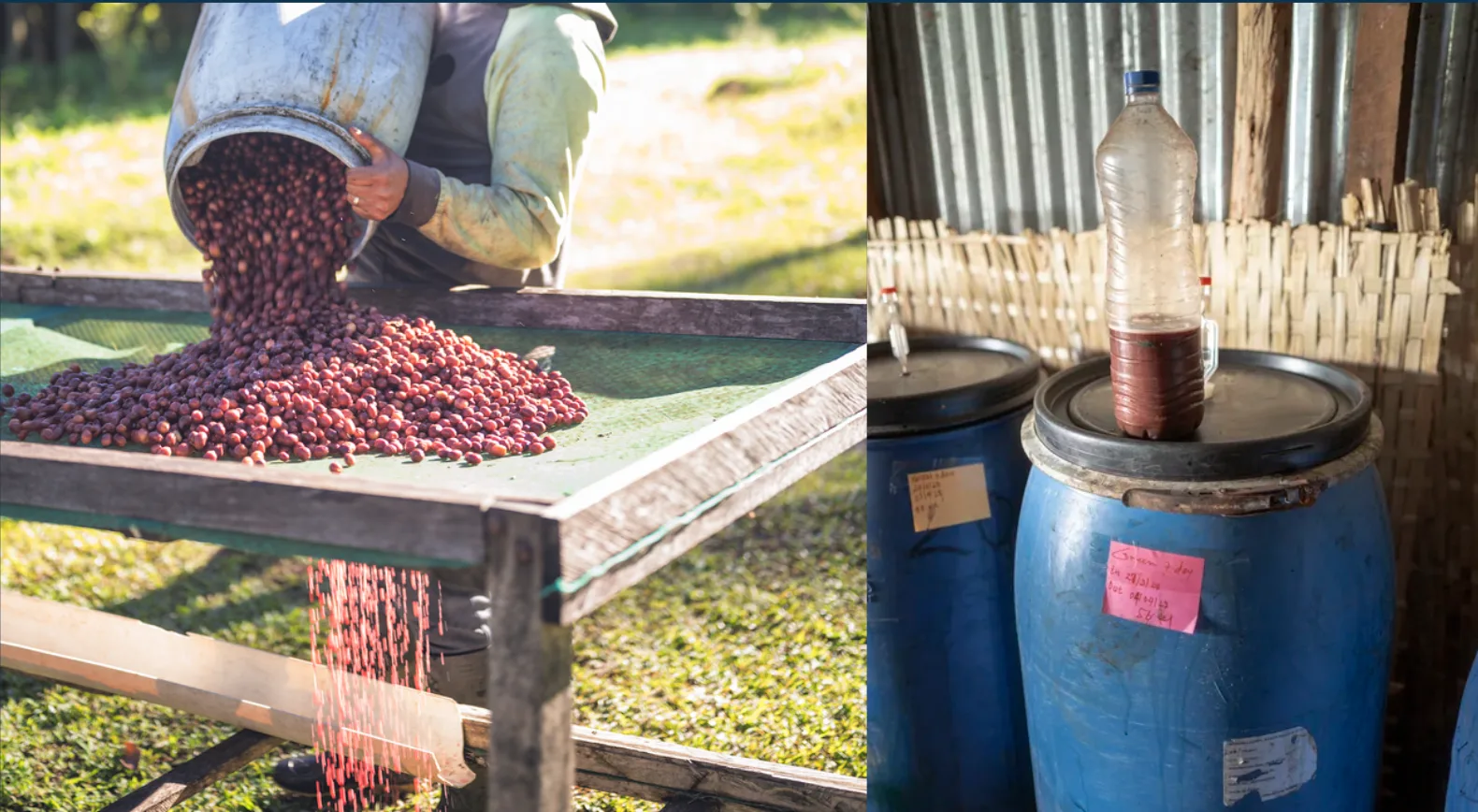
- Mossto is the fruit juice that comes from coffee cherries. It can be harvested and recirculated as part of fermentation
- It is nutritionally and microbially rich.
- It is controversial if its use constitutes a cofermentation since it is a fruit juice being used to augment flavors.
Where it’s found: Colombia, Ecuador, Ethiopia
Rarity: Uncommon as a label, often baked in as part of other processes
Common varietal associations: Any
From Zest coffee: Mossto is the juice or crushed pulp of coffee cherries, obtained during fermentation. As cherries get compressed during fermentation, their mucilage release juices which are full of sugars and organic compounds, the perfect nutrient for hungry microbes during fermentation. Producers like Camilo Merizalde, from Finca Santuario, have pioneered the use of mossto in fermentation.
Robert’s opinion: I don't have specific expectations for mossto alone since it is so often part of other processing steps.
Dry fermentation
Also known as: Special Dry Fermentation (DFS)
A term exclusive to Altieri in Panama, an enhanced natural process fermented in mossto and dried in a chilled environment.
Where it’s found: Altieri in Panama
Rarity: Exclusive term to Altieri in Panama
Common varietal associations: gesha
Robert’s opinion: I haven't been more impressed by this than their standard natural offerings, which are already strong.
Gold washed
Very much not a regular washed. Mossto (coffee cherry juice) is collected in an initial low oxygen fermentation. Lactic yeasts are added and recirculated to the beans, now pulped, for a second fermentation. As the resulting color is yellow-ish, it was named gold washed.
Where it’s found: Campo Hermoso, Colombia
Rarity: Less common now that Campo Hermoso appears to have moved onto other experiments
Common varietal associations: Pink bourbon
Robert’s opinion: For the perceived funk, it's got some interesting stuff going on. On the negative, it can get herbal, beer hoppy, and green pepper-ey. On the upside, it can express complex citrus like Japanese shiikwaasa, tropical fruits, and zesty juiciness.
Solsticio
Also known as: Solsticio
A process named by Los Patios in Colombia. After an aerobic fermentation cycle, it’s fermented in a tank with secret blend additive they call “Fruit Juice” involving mossto.
Where it’s found: Limited to Los Patios in Colombia
Rarity: Limited to Los Patios in Colombia
Common varietal associations: castillo, caturra, pink bourbon
Roasters spell the name inconsistently, including "Solsistico"; treat those as the same lot family.
Further reading: https://pushxpullcoffee.com/products/colombia-los-patios-solsticio; https://www.brandywinecoffeeroasters.com/collections/all-coffee-1/products/colombia-los-patios-solsistico
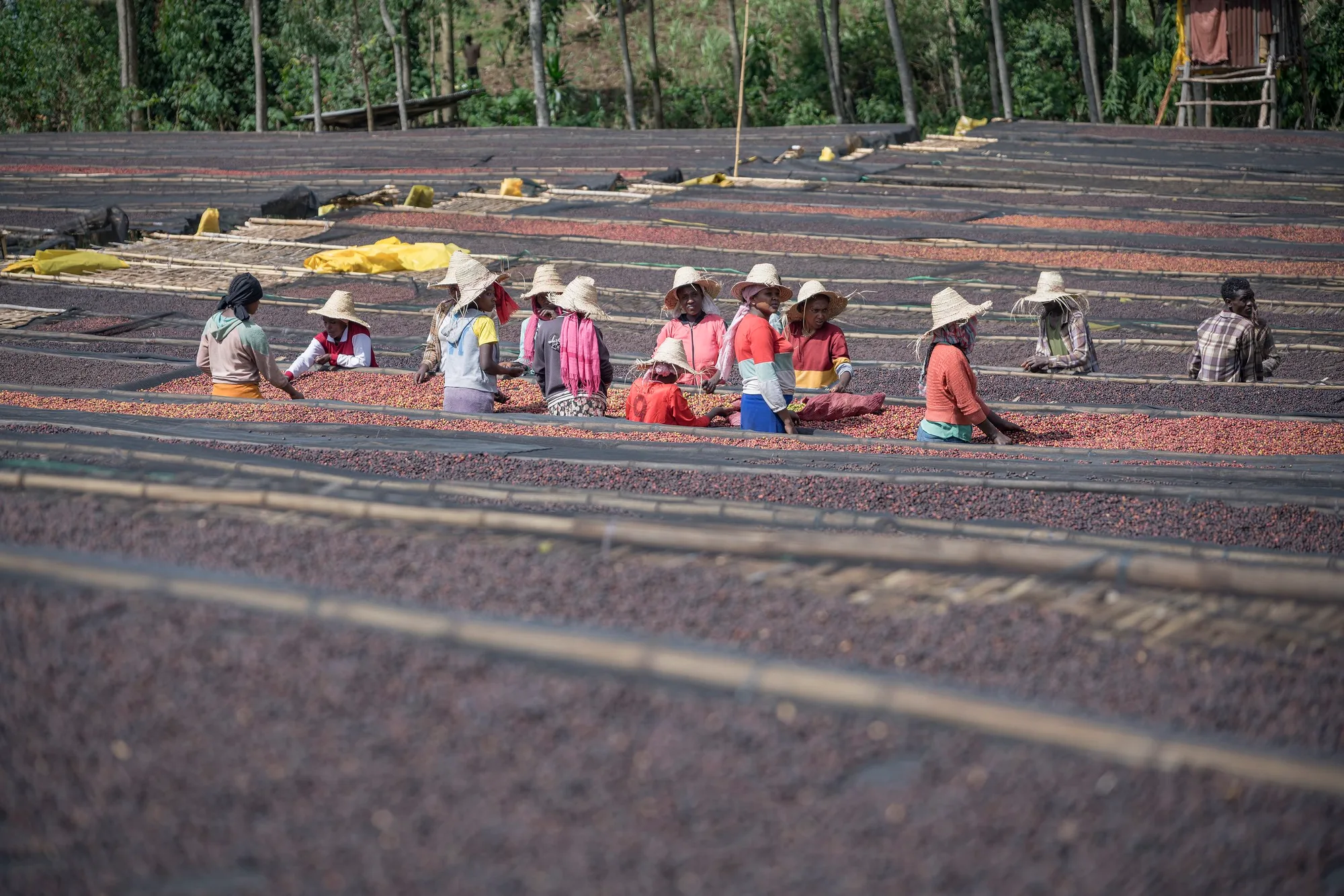
Natural
Also known as: Dry process, Alma Negra Natural, Black Diamond, Dry
- One of the two primary processes with its washed counterpart.
- Originally, it referred to the ubiquitous practice of leaving piles of coffee cherries to ferment on a flat surface such as a concrete patio or raised, netted bed (a.k.a. African bed) to ferment and dry over several tens of days.
- This process may be used for flavor purposes and/or due to local access to water.
- Some places dry fully in the sun, some deliberately in the shade, and other places do something in-between; it often comes down to infrastructure and cost.
- Due to the volatile nature and difficulty to achieve even fermentation, this was considered a bit more rock-and-roll in flavor outcomes than the more predictable, tamer flavors coming out of a washed process.
Where it’s found: Everywhere
Rarity: Common
Common varietal associations: Everything
Robert’s opinion: It's tough to generalize something done everywhere and with so many sub-flavors. As it's a bit more rock-and-roll than washed, you may expect higher highs and lower lows. Legendarily, the “blueberry bomb” Ethiopian naturals that were the gateway offering for many of this generation's coffee industry came as a result of this rock-and-roll.
Coco natural
Also known as: Coco natural; Coco dried; Coco box natural
Natural dried over several weeks in a box drier that Bolivian producers call a “coco”
Where it’s found: Bolivia
Rarity: Uncommon
Common varietal associations: Gesha, Caturra, Java
Nothing to do with coconut, despite what the name suggests to English readers - the boxes are named for their shape.
Further reading: https://momoscoffee.net/products/bolivia-las-alasitas-geisha-coco-natural; https://bedst.coffee/collections/all/products/los-rodriguez-coco-natural-caturra
Piramide
Also known as: Pyramid
A natural process where the coffee cherries are temperature controlled by covering it up midday while it is the hottest and stacked in a triangular column (hence pyramid) at night to retain the absorbed temperature, modulating the temperature.
Where it’s found: Hacienda Sonora in Costa Rica, but the process is performed elsewhere
Rarity: Uncommon
Common varietal associations: None in particular
Robert’s opinion: I think this process works in the cup, and is in a similar vein to what high-end lots are shifting towards - conscious temperature control. It cuts on the alcoholic notes common from overferment in Costa Rica naturals to let the red and purple fruits present cleanly.
Nitrogen maceration
Also known as: Nitro Fermentation, Nitro Washed, Nitrogen Flushed, Nitrogen Washed
An offshoot of carbonic maceration. Coffee cherries are hermetically sealed and air is flushed out with nitrogen to achieve a desired interaction with certain yeasts and microorganisms while reducing the undesirable effects of others responsible for defective flavors.
Where it’s found: Finca Milan in Colombia, Savage Farms in Panama, a few other select farms that can afford the devices and to experiment.
Rarity: Rare
Common varietal associations: None in particular
Robert’s opinion: Expect some exciting funk notes. Sometimes this gets used in conjunction with selected yeasts to taste similar to a coferment. Other times, it may express the best case scenario for naturals - a clean, present fruit note without the defects.
Ozone sterilized
Ozone is used to sterilize microbes in fermentation tank surfaces to prevent between-batch contamination, or to the coffee cherry itself to sterilize external microbes. Not a process on its own.
Where it’s found: Anywhere that can afford to do so. Notably, Granja Paraiso 92 in Colombia and Ratnagiri Estate in India
Rarity: Not too rare, but may not be mentioned on the bag.
Common varietal associations: —
Robert’s opinion: It should not impart flavor on its own, but rather, mitigate the defective qualities imparted by leftover microbes.
pH clarity
pH is closely monitored as a state for desirable microbial and enzymatic activity to occur while minimizing undesirable effects.
Where it’s found: La Palma y El Tucan (LPET) in Colombia
Rarity: Perhaps none available since LPET has taken a 2 year production hiatus as of 5/2025.
Common varietal associations: gesha, sidra
Robert’s opinion: I've had good experiences over several samples. There's solid florality up front paired with tart fruits. I'd think qualities like lavender, bergamot, blood orange, and pluots.
Pulse vacuum
Also known as: Pulse vacuum; Pulsed vacuum
Depulped coffee cherries are fermented with mucilage in a cycled negative pressure tank. The movement of dissolved gases drives liquid into the coffee without letting oxygen settle back in. Similar to anti-maceration.
Where it’s found: Limited to 4 LLamas Coffee farms in Bolivia
Rarity: Limited to 4 LLamas Coffee farms in Bolivia
Common varietal associations: gesha
Sold as both a honey and a washed, so the finish is not part of the name.
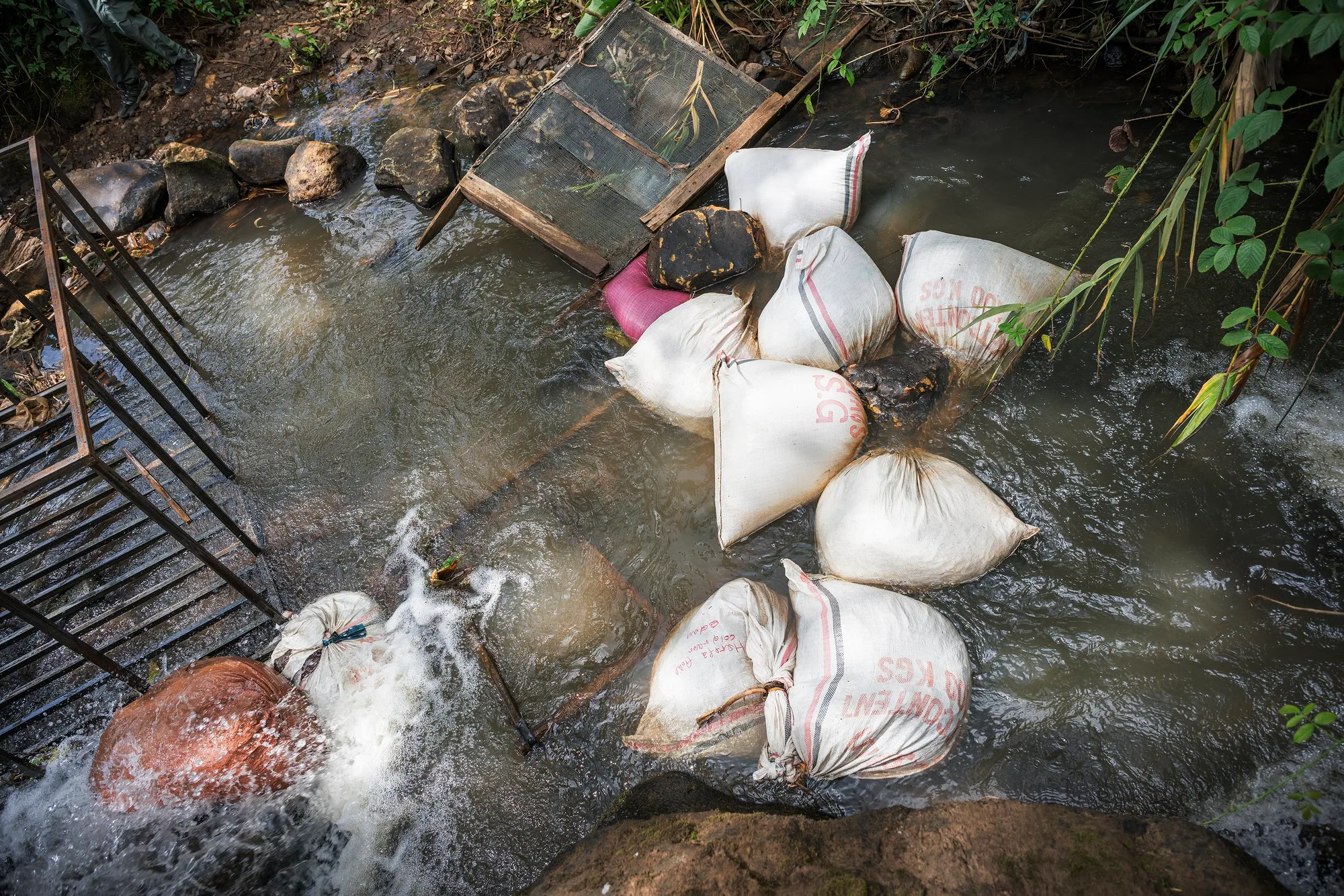
River flow ferment (RFF)
A process from Altieri in Panama. The goal is to dissipate the heat of fermentation by placing cherries into Grainpro bags and expose them to running water for a controlled period of time. Fermentation is able to occur while minimizing the funky byproducts.
Where it’s found: Altieri in Panama, specific farms in Ecuador and Ethiopia
Rarity: Exceptionally rare, dependent on access to a river
Common varietal associations: Gesha
Robert’s opinion: Clean for a natural, but not too obvious on its own.
Criolic Folio
Also known as: Criolic; Criolic Folio
Ninety Plus's cold-water fermentation in Panama: cherries are submerged directly in cold river water, which the producer says decelerates the decomposition of the mucilage sugars, stretching the ferment out at a temperature no tank could hold without refrigeration. Filed under River flow ferment (RFF) as the family's river-water variant; RFF itself is Altieri suspending sealed bags in a stream to cool them, while here the river is both the coolant and the medium and the cherries are whole rather than bagged.
Where it’s found: Ninety Plus, Panama. Printed by Coffea Circulor and Standout.
Rarity: Exceptionally rare - 3 listings, dependent on access to a cold river, and priced accordingly.
Common varietal associations: caturra, gesha
"Criolic" alone appears on companion lots from the same producer and is the same process shortened.
Further reading: https://coffeacirculor.com/products/panama-ninety-plus-criolic-folio-caturra-cx-legacy-yuzo-characteristics; https://www.standoutcoffee.com/collections/competition-coffee/products/yuzo-pink-ninety-plus-exclusive
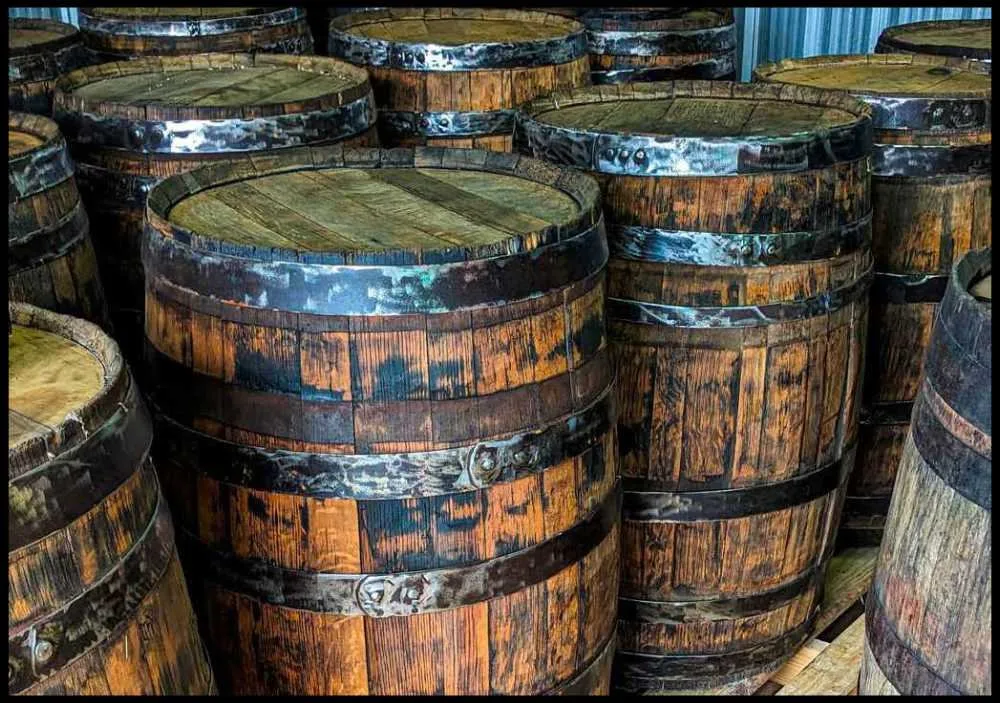
Rum barrel
Also known as: Oak barrel process
This would count as an infused process. Like other beverages that try to impart oak/rum barrel cask flavors, this is the coffee version.
Where it’s found: Ecuador, notably Hacienda La Papaya.
Rarity: Medium, I see this offered at several popular roasters each year
Common varietal associations: None in particular
From Black & White: Freshly harvested cherries are placed in spent rum barrels to ferment for five days in a closed, anaerobic environment. These rum barrels had been used to age Ecuadorean rum for over 20 years. Afterward, the whole cherries spend 28-30 days in drying rooms.
From Roastmasters: For the past 5 years La Papaya began experimentation by placing freshly harvested, ripe cherries in various containers for fermentation, culminating with this Oak Rum Barrel offering. Cherries ferment in the barrels for 120 hours (5 days) in dark rooms kept below 65 degrees, then head to the drying room for 28 to 30 days.
Robert’s opinion: This is straightforward. Provided you have experience tasting oak barrel flavors in other drinks, you'll have an easy time finding that effect here; expect alcohol, intense richness, and vanilla sweetness.
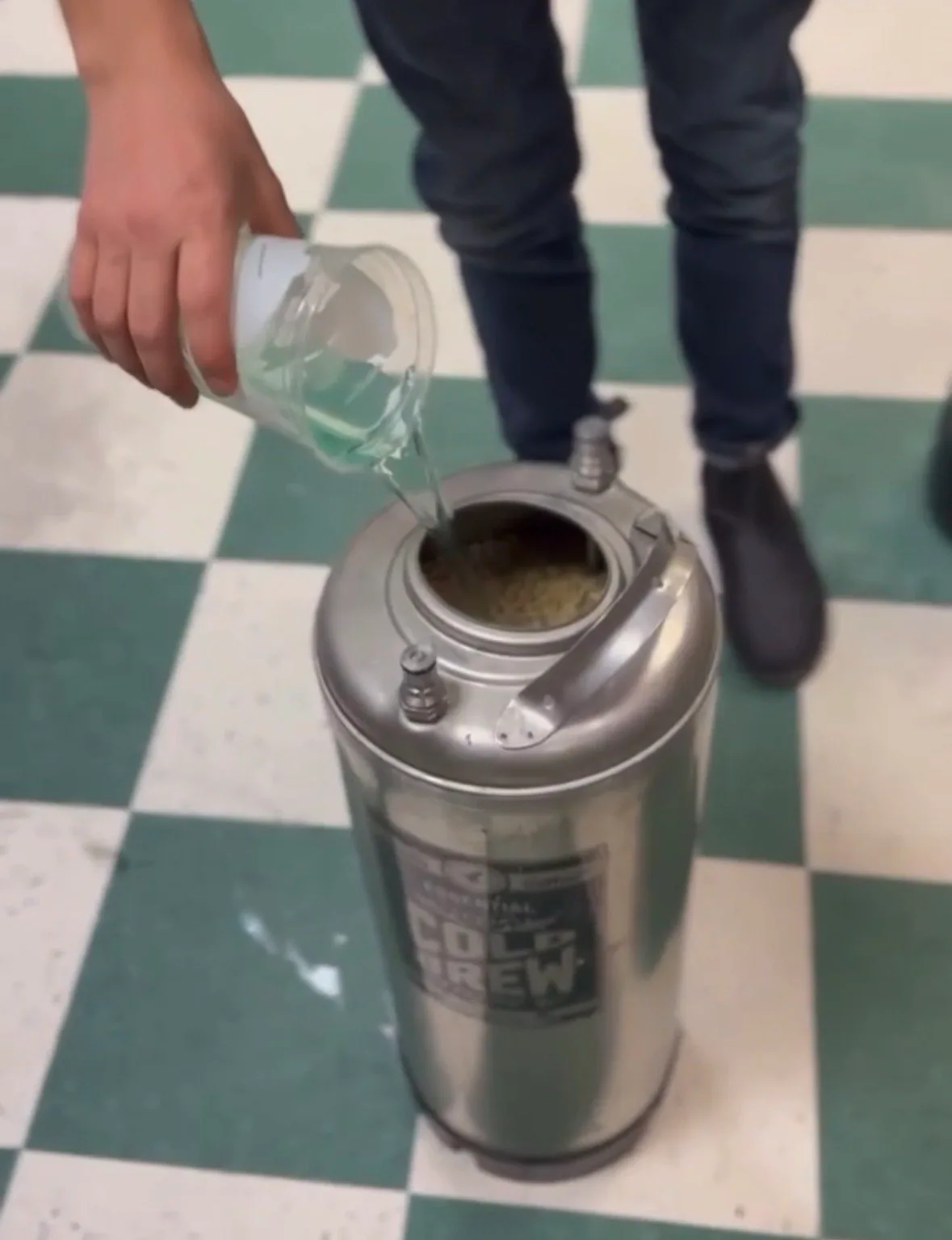
Soda rehydration
Not a technique by a coffee producer, but a proof of concept for how sugars interact with milled, stable green coffee that can be roasted normally. In short, liquids affect the cellular structure of how a green coffee roasts, and sugar further enhances the effect.
Where it’s found: Not on coffee farms
Rarity: Effectively never encountered on a bag label
Common varietal associations: None in particular
Further reading: The fundamentals of green coffee rehydration by Christopher Feran; Applying the above with soda by Christopher Feran
Robert’s opinion: It's difficult to taste this without being biased with the hype and expectations of the funny steps applied. There is a sweetness, but it's perhaps not related to the flavor you put in. I do not recommend for the labor and extra headache in roasting.
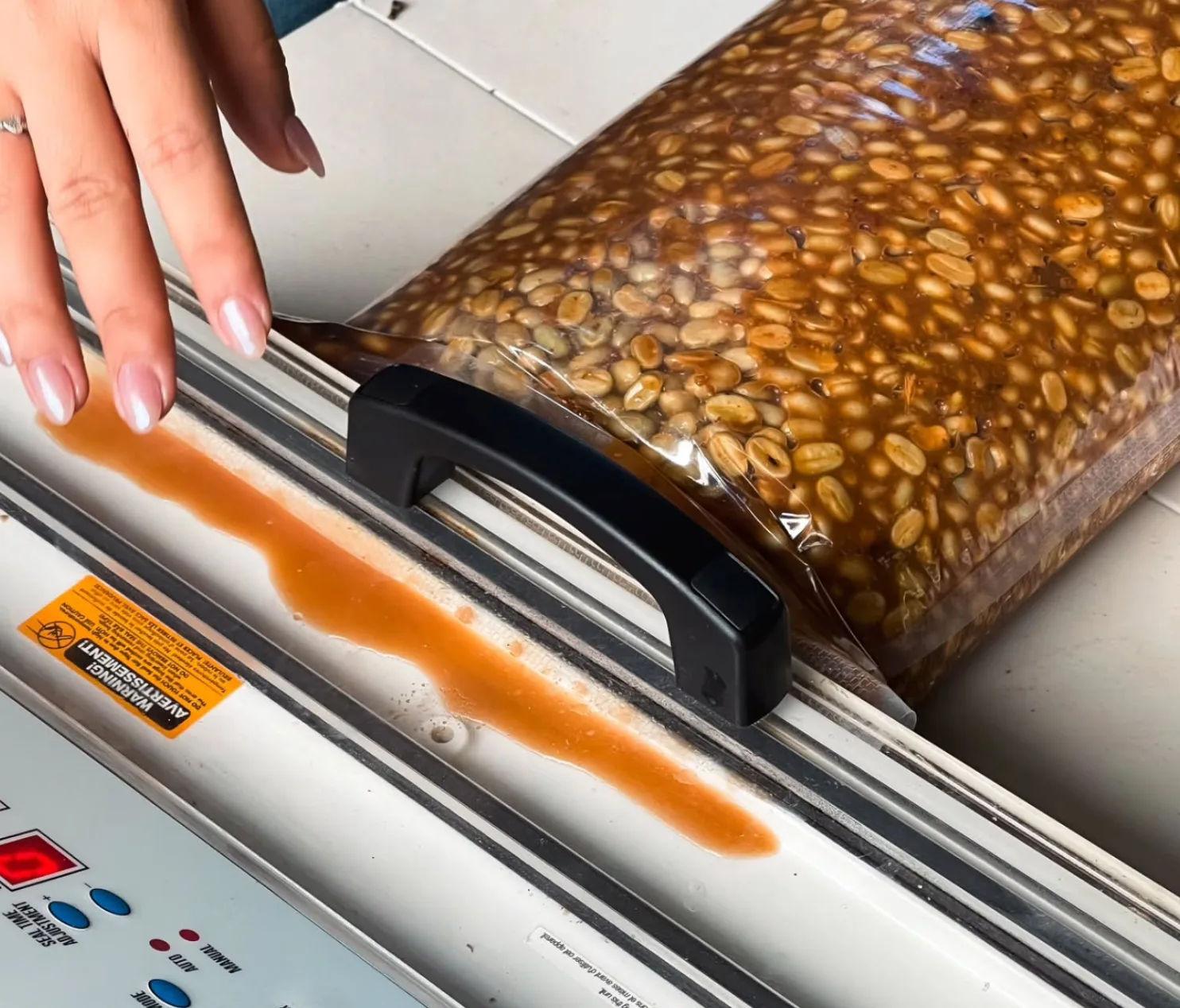
Sous-vide
As the name suggests, the coffees are fermented in sous-vide bags at controlled time and temperatures to facilitate enzymatic activity. It's produced at however much can fit in a plastic bag in their sous-vide unit, so it is highly rate-limited in volume.
Where it’s found: Exclusive to Hachi Project by Diego Bermudez in Panama
Rarity: Very rare, highly limited in production due to plastic bag capacity, and consequently very expensive
Common varietal associations: gesha
From Hachi: Enzymatic biocatalysis under controlled thermal conditions using pectinase and glucosidase. At 60°C, enzymatic activity is accelerated but remains selective and predictable, unlike microbial fermentation. Thermal incubation at 60°C for 2 hours reaches a 'sweet spot' where enzymes remain active but microbes are inactivated, so no yeast or bacterial metabolite off-flavors form.
Further reading: Hachi project post
Robert’s opinion: It can have strongly present candied stone fruits and an abnormal amount of florality. If you like thermalshocks, it's like a very clean version with the ideal qualities of a Panama gesha.
Splash
A combination of short anaerobic fermentation and lactic processing; a 'splash' of each. Can be finished as a natural or washed.
Where it’s found: CCD farms in Panama
Rarity: Rare
Common varietal associations: catuai, gesha
From Equation: Splash undergoes a depulping and goes through a short aerobic fermentation process of just 24 to 48 hours, ensuring that the coffee retains its natural flavor and aroma. A special blend of lactic acid bacteria is added to further enhance richness and complexity, aiming to highlight the terroir of Panama's volcanic soil.
Robert’s opinion: I've tried 7 gesha offerings, and they were totally scattered in characteristics. I'm not convinced that this process alone has a signature flavor impact.
Static cherry
An anaerobic yeast fermentation to promote lactic acid.
Where it’s found: CCD farms in Panama
Rarity: Rare as a label. Other places may perform the same actions but may not be referred to as such on the final bag label.
Common varietal associations: castillo, catuai, gesha
From Brut Coffee: The cherry is sealed into steel tanks with no oxygen present. This anaerobic environment allows certain bacteria and yeast to develop at a slower rate, with fermentations averaging 24 to 72 hours, lending a subtle vibrancy to the profile due to the prevalence of lactic acids in the cherry.
Robert’s opinion: I don't think this process is too obvious in taste, but I'd expect lime, herbal zestiness from the differing varietals I've tried.
Supernatural
I don't believe there is a consistent definition for this. It appears to be used to refer to Ethiopian naturals. Sometimes involving an anaerobic step, sometimes slow dried. Upon asking around in Ethiopia, I got varying answers that diluted down to "good natural".
Where it’s found: Ethiopia
Rarity: Uncommon, but seemingly less common in higher end Ethiopian offerings
Common varietal associations: Ethiopian heirlooms
Robert’s opinion: I see this label more from roasters who tend to source cheaper greens, with this term carrying marketing weight as a premium option. Among my own roasts of this green, experiences have also been scattered; I've yet to find the "super" part.
Symbiotic
Basically a mossto process with differing varietals between the mossto and target seed. In the case of caturra, it is fermented in the mossto of a gesha, to "symbiotically" introduce microbial diversity. This term may be used for other processes as well.
Where it’s found: Exclusive to Hachi Project by Diego Bermudez in Panama
Rarity: The label is rare, but the process is basically a mossto rehydration.
Common varietal associations: caturra, Ethiopian heirlooms
From Offshoot Coffee: The Symbiotic Process is a proprietary fermentation technique developed by Hachi that enables flavour to be transferred between coffee varieties without using anything but coffee itself. A structurally stable variety like Caturra is placed into a fermentation bath made from the mosto of an aromatic donor variety, such as Gesha, which is already full of sugars, yeast-derived esters, and volatile aromatic precursors that gradually absorb into the Caturra cherries.
Robert’s opinion: Sample size of 1 with an Ethiopian heirloom, it had a solid balance of florality and available generic sweetness.
Tartaric acid process
Tartaric acid is added during a fermentation stage to influence pH levels, as seen in the wine and beer industries.
Where it’s found: Colombia, such as El Mirador and Santa Monica
Rarity: Rare
Common varietal associations: Castillo, orange bourbon
Robert’s opinion: I haven't enjoyed much of this. It's got an unusual amount of citrus zestiness and florality, but the balance comes off strange to me and can have a finish like orange wine that I don't enjoy.
Terroir-intensified maceration (TIM)
Similar to bio-innovation, local microorganisms are collected and inoculated to improve "terroir".
Where it’s found: Ethiopia from Alo coffee by Tamiru Tadesse
Rarity: Rare, produced by Alo coffee for Tri-Up distributors
Common varietal associations: 74158 Ethiopian heirloom
From Wes Ngopi: TIM (Terroir Intensified Maceration) is an innovative fermentation method developed by Tri-Up, a specialty green coffee company in Taiwan. It focuses on enhancing terroir by leveraging beneficial microorganisms collected from the cherries and surrounding environment, introduced during fermentation. TIM Washed: cultivated bacteria and yeast are added to whole cherry fermentation for four days, then depulped, washed, and dried on shaded raised beds for 24 days. TIM Natural: same microbial cultivation, whole cherries ferment for four days then dry as whole cherries for five weeks, enhancing sweetness and fruit-forward complexity.
Robert’s opinion: By design, it is not intending to impart its own flavor, it's not so self-evident on its own. The effort involved to produce these lots is likely the bigger differentiator.
Thermalshock
Also known as: Terminally Shocked Decaf
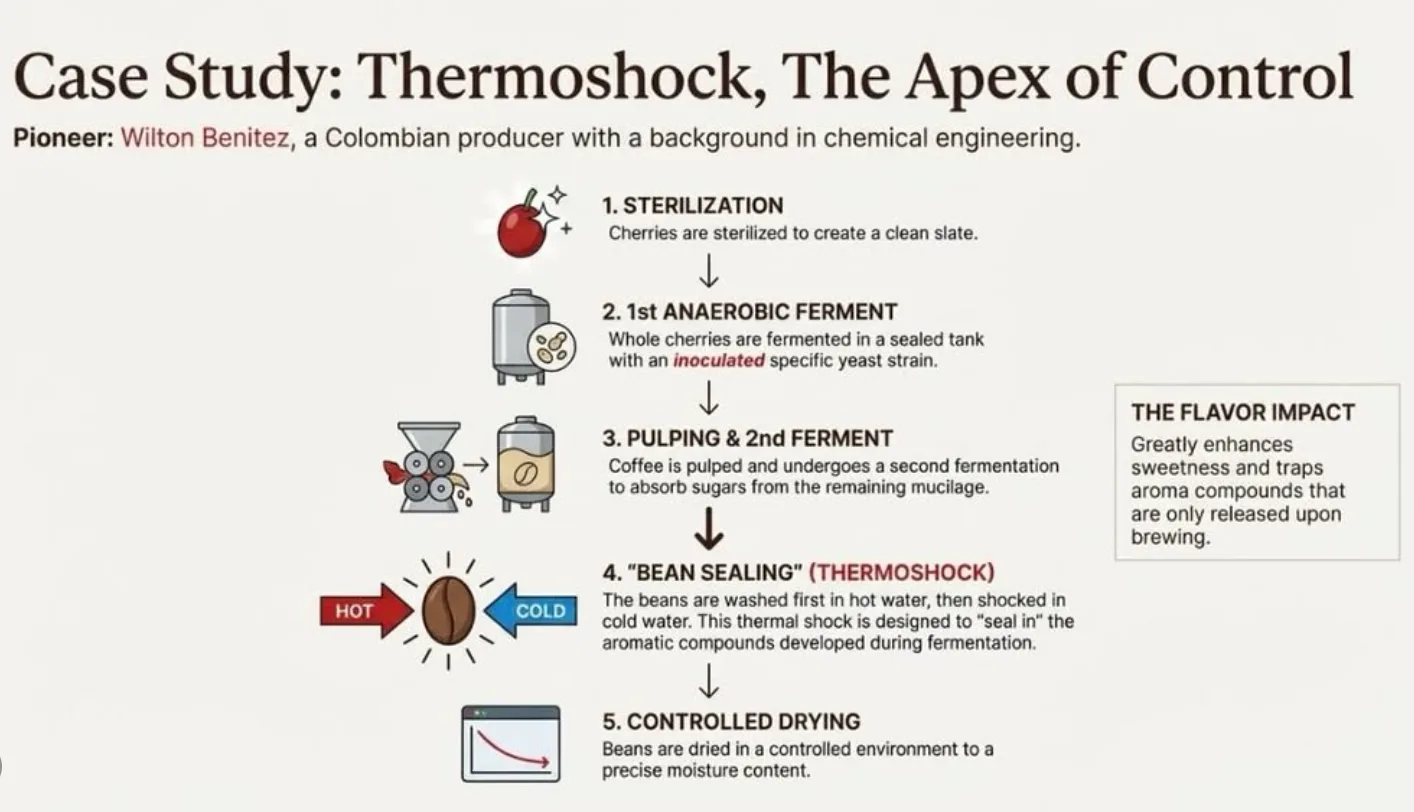
Coffee cherries are exposed to hot water (e.g. 50C) for several minutes then rapidly cooled (e.g. 10C); hot->cold. This is a step, not the overall process itself, and is often combined with anaerobic steps and yeast inoculation. Because water is involved and implies a washing phase, it can be considered a washed process despite the stark conflict in flavor expectations to traditional washed methods.
Where it’s found: Colombia, most notably at Finca Paraiso by Diego Bermudez or at Granja Paraiso 92 by Wilton Benitez, but plenty of other farms and countries now.
Rarity: Common
Common varietal associations: castillo, gesha, pink bourbon, typica
From Fantine: During thermal shock, biochemical changes occur in coffee cherries. Heat causes the destruction of enzymes such as catalase, pectinase and peroxidases which are responsible for accelerating the fermentation process of the bean. By eliminating their action, it is possible to reduce oxidation processes, increasing shelf life. Being able to inoculate specific microbial strains implies greater control over the type of fermentation to be promoted, such as lactic or malic fermentation, giving the cup a more fruity character.
Further reading: Basic Barista; Buy the Drip podcast
Robert’s opinion: Highly polarizing, and one of the notably funky processes. It can be hard to isolate among the other processing steps applied, but I expect synthetic, candy flavors, such as the Japanese candies Hi-chew and Puchao.
Thermic fermentation
Also known as: Churro; Thermic ferment
A process found at Aquiares Estate in Costa Rica. Coffee cherries are laid on black plastic tarps, then rolled (hence “churro”), and fermented in a solar drier, finally finished as a natural. They are targeting alcoholic flavor notes by selecting for heat-tolerant microbes in a semi-anaerobic environment.
Where it’s found: Aquiares Estate in Costa Rica
Rarity: Rare
Common varietal associations: centroamericano, marsellesa
"Churro" is the farm's informal name for the same thing and should resolve here rather than to an entry of its own.
UV sterilized
Use of UV light to sterilize microbes in fermentation tanks and surfaces to prevent them from infecting subsequently processed lots. Not a process on its own, it is a step between lot batches.
Where it’s found: Anywhere that can afford to do so. Notably, Granja Paraiso 92 in Colombia
Rarity: Not too rare, but may not be mentioned on the bag.
Common varietal associations: —
Robert’s opinion: This is more of a cleaning step between processing batches, it should not impart flavor on its own, but rather, mitigate the defective qualities imparted by leftover microbes.
Washed
Also known as: wet process (as in, water was used), fully washed, traditional washed, classic washed, Submerged Fermentation, Wet-fermented
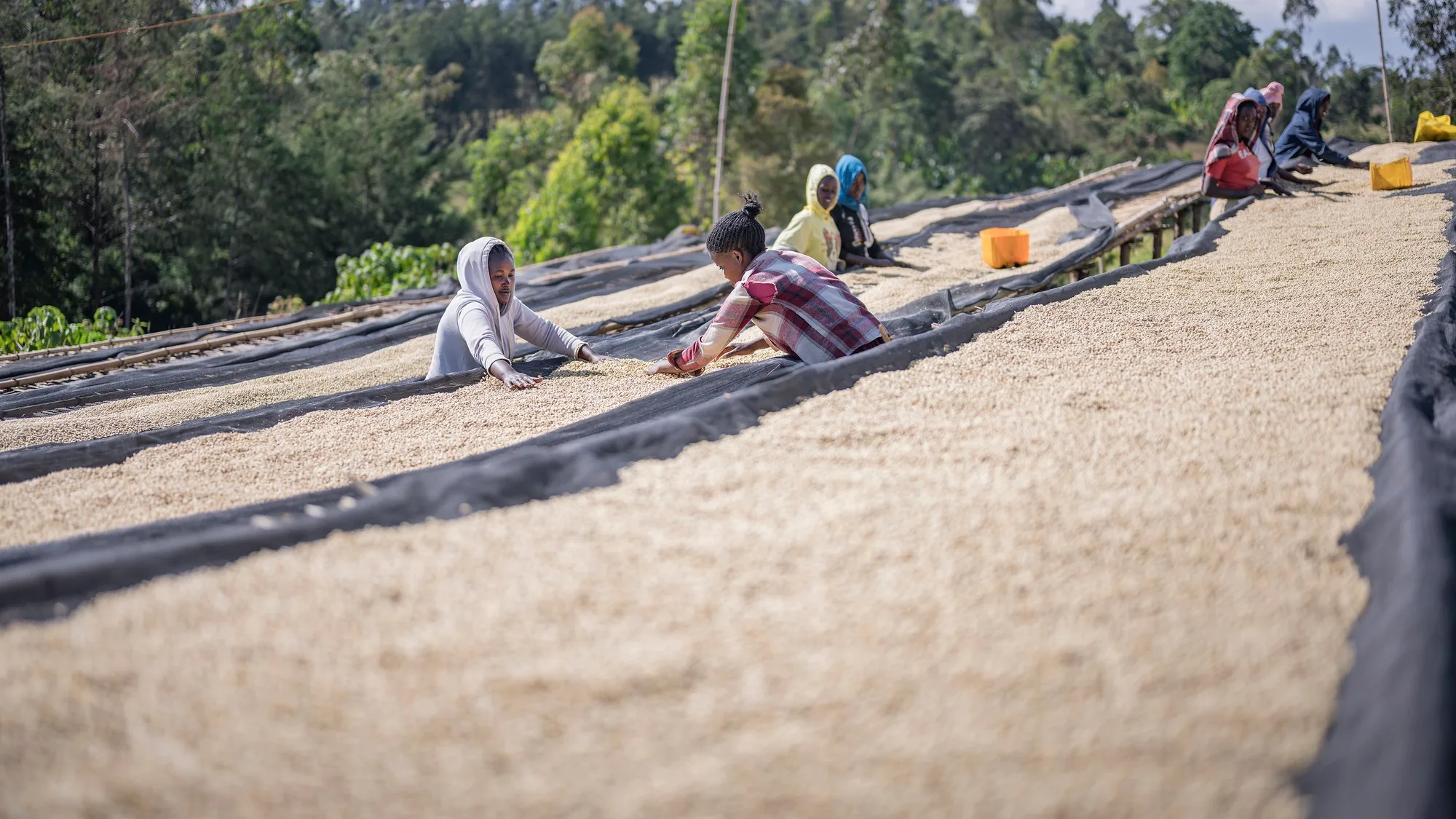
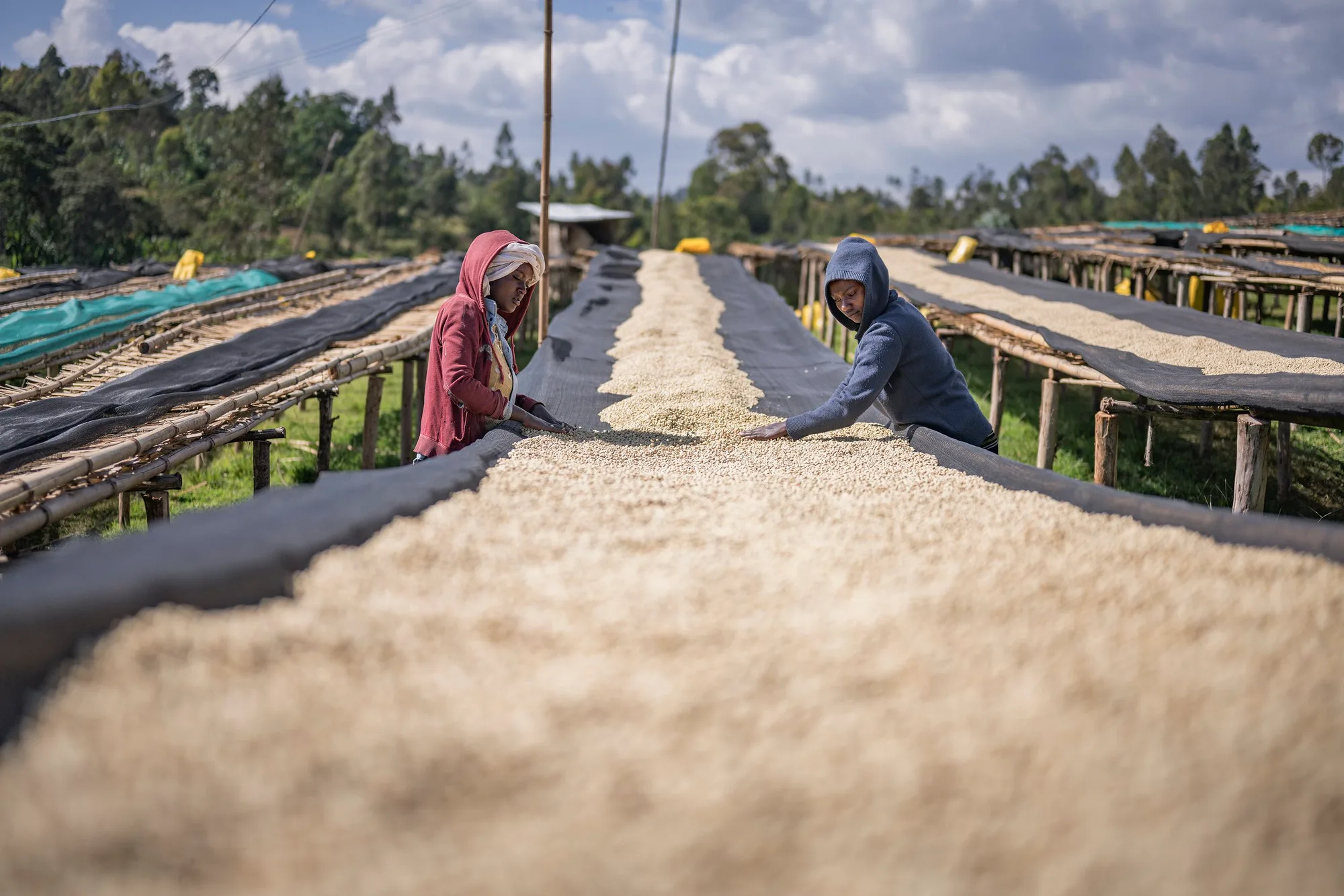
- One of the primary processes. Historically, washed coffees were considered higher quality due to a separation of the bad floating cherries and cleaner, even, predictable results.
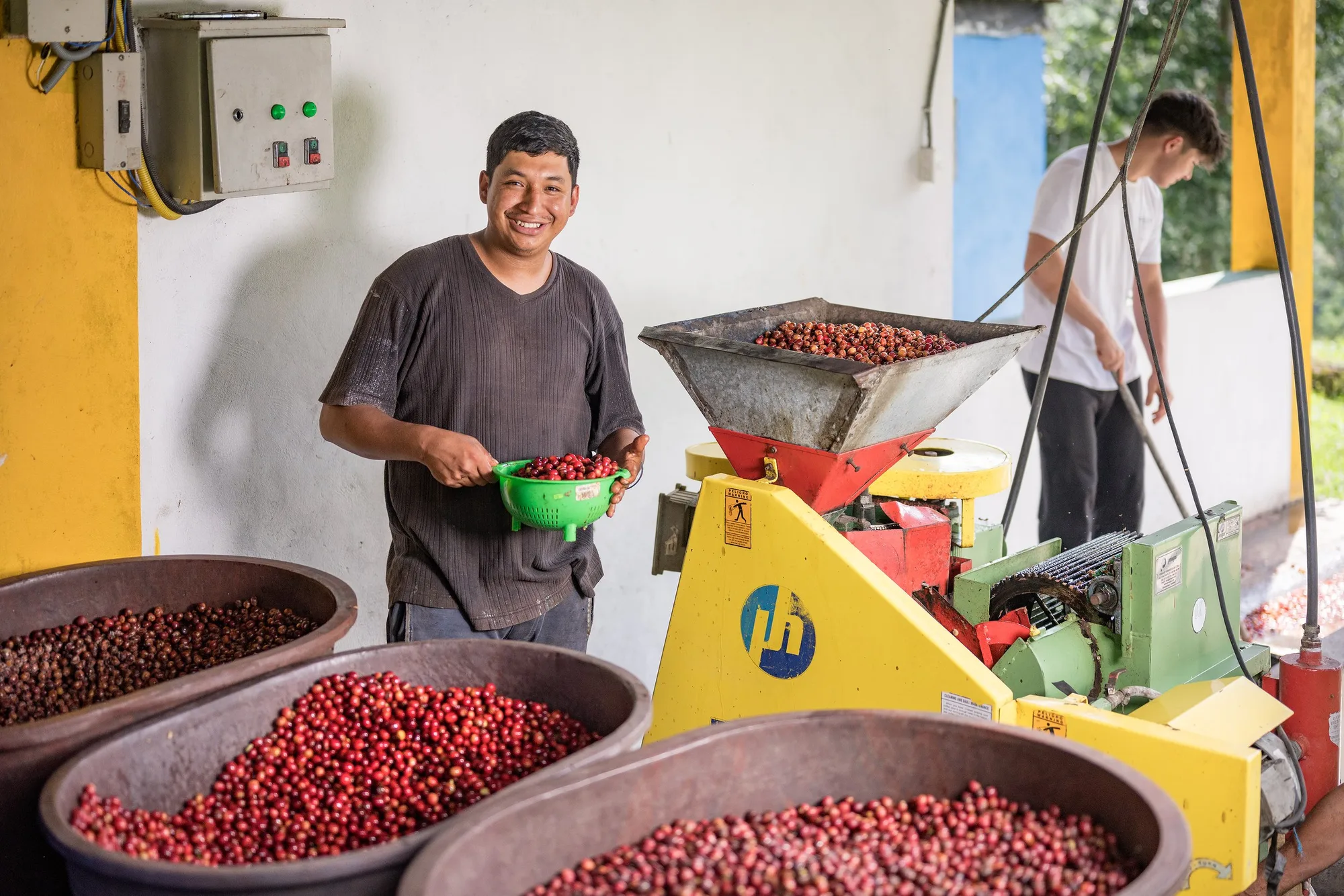
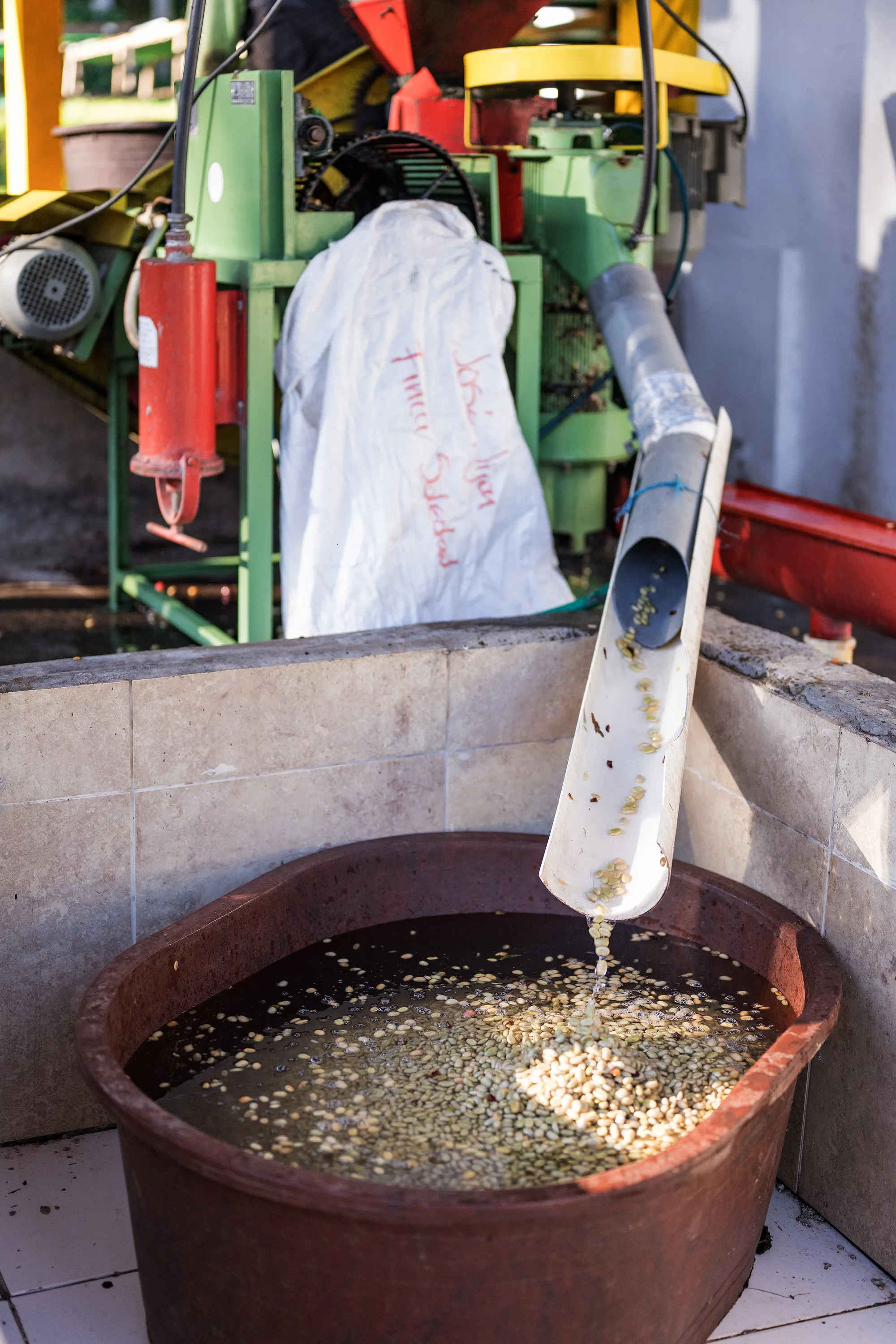
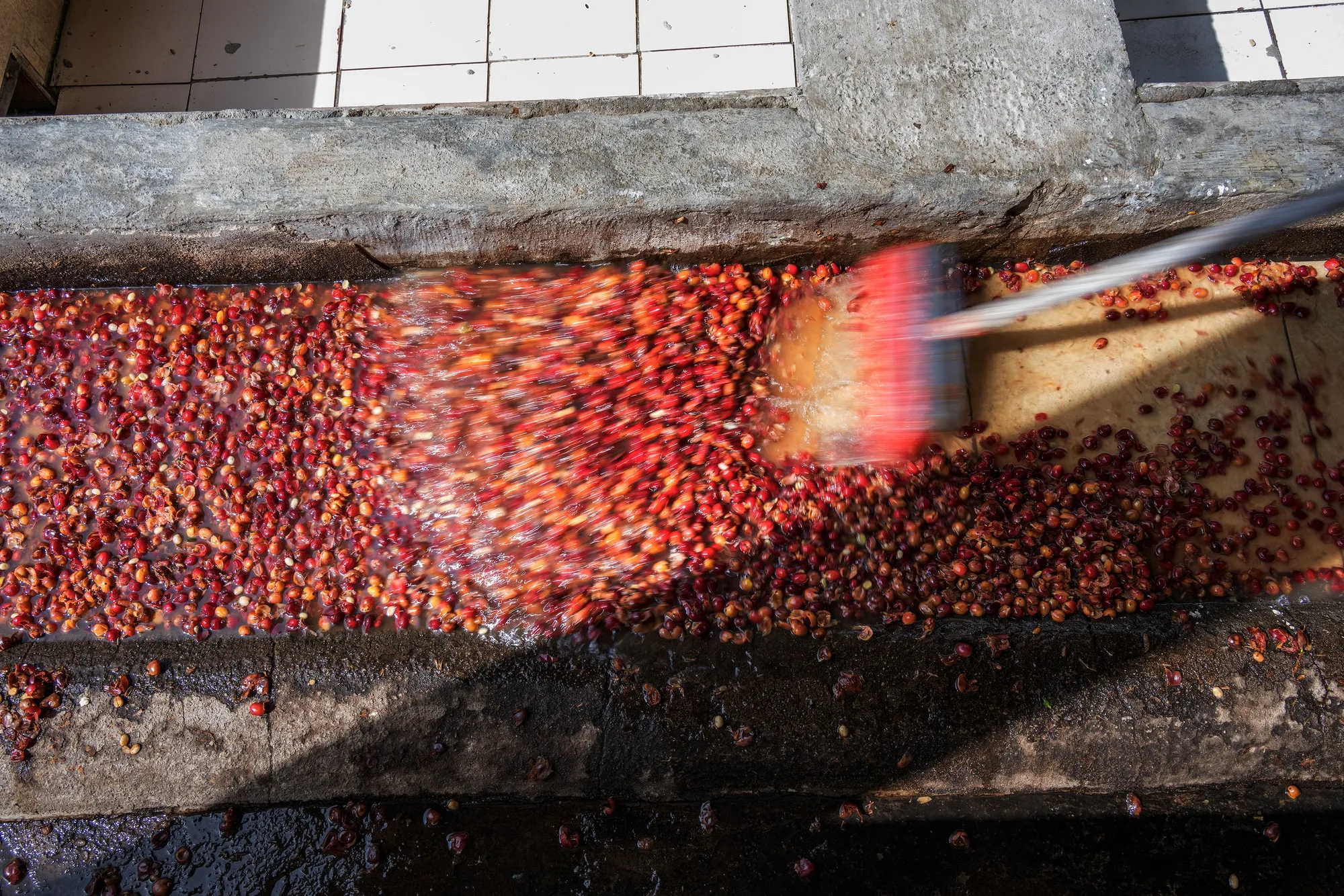
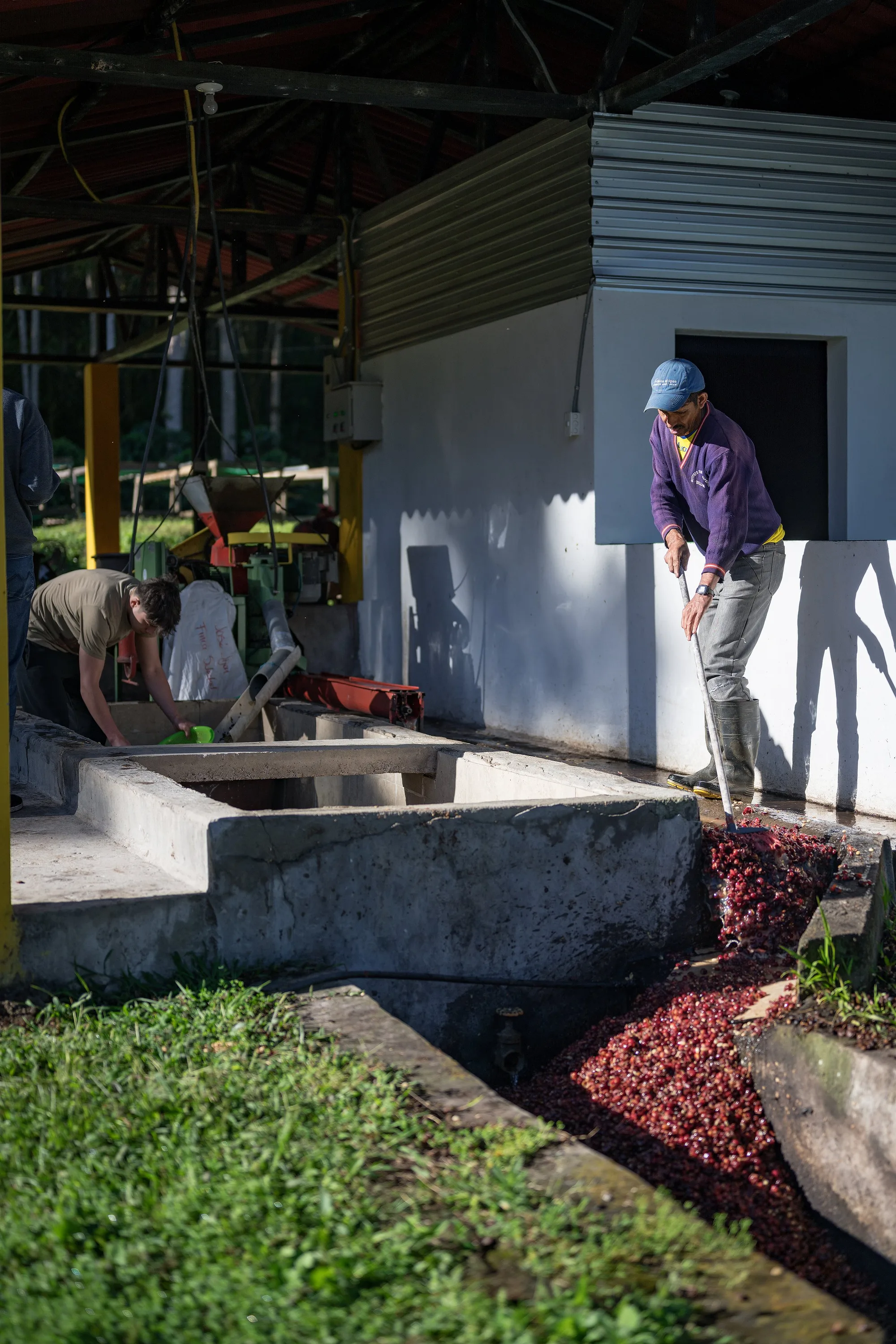
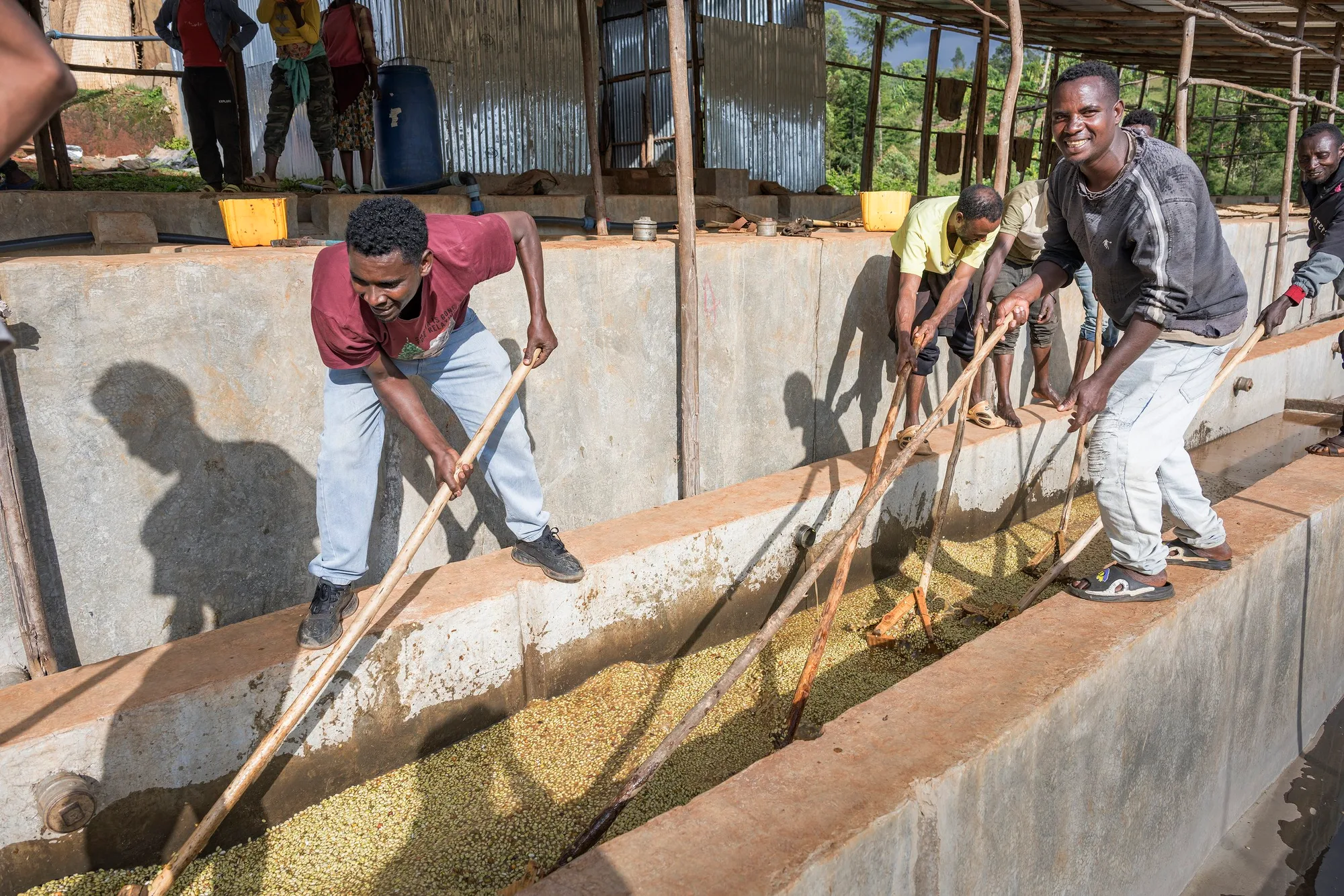
- In usual washed approaches, coffee cherries are put in a tub to separate floaters (bad) from the sinkers, the sinkers are pulped to remove the mucilage layer covering the seed, and raked/pushed down channels to rinse off remaining material.
- In recent times, the term has been extended to simply refer to what's done at the end - regardless of what fermentations and steps were taken, if mucilage is removed at time of drying, it might be called washed. This has increasingly created confusion in terms of what to expect from the label. Enthusiasts may refer to this mismatch of expectations as "warshed".
- At any point, some fermentation may occur and retain the washed label.
- Different countries may have different policies on how washed coffees are handled as an agricultural product.
- Access to water in different regions affects the viability and environmental impact of this process.
Where it’s found: Everywhere
Rarity: Ubiquitous
Common varietal associations: Any
Robert’s opinion: A truly washed coffee, lightly roasted should ideally be defined by its mild, clean, balanced acidity compared to increasingly fermentation-heavy processes.
Double washed
Compared to a standard washed where coffee cherries are separated between floaters and sinkers in water, mechanically pulped to remove mucilage, fermented, then pushed down a flowing channel, this process involves one more fermentation stage before being ran through another washing stage down the channel again.
Where it’s found: Burundi, Kenya, Rwanda
Rarity: Medium common
Common varietal associations: Bourbons (SL's), typicas
Robert’s opinion: I wouldn't say it's obviously different than a washed. My notes suggest patterns of florality and yellow fruits on the good end, but not necessarily better scoring because it was double washed.
Semi-washed
This may refer to a couple approaches on the rationale spectrum of "it's kinda-sorta washed-ish":
- Synonymous with wet-hulled, a technique in Indonesia where the final, inner parchment layer is removed while moist, rather than being dried first
- Synonymous with honey, where cherries are pulped and dried in mucilage
- Cherries are depulped without water and then fermented with water, also done in Colombia
Where it’s found: Anywhere
Rarity: Common. As a process it is still common, but as a term on the bag it may be arbitrarily applied by the producer, exporter/importer, or roaster to signal its purity.
Common varietal associations: Any
Robert’s opinion: Hard to generalize since it's a mess of definitions. It doesn't particularly excite on its own, and I shrug and remain open-minded to it being executed well or poorly.
Traditional/fully washed
Also known as: boring washed (BWC = boring washed caturra, BWPG = boring washed Panama gesha)
In the confusing modern world where washed might have had a whole bunch of additional steps applied, this label signals the simplicity of being a predictable, regular old boring washed. No thermalshock, no anaerobic stage, etc. The coffee is picked, cherries are floated, the sinkers are pulped to remove the skin, and the inner mucilage layer is removed with water.
Where it’s found: Anywhere
Rarity: Common, but not always explicitly listed as "traditional/fully washed", often shortened to just "washed".
Common varietal associations: Any
Robert’s opinion: Though it'll shift with the roast level and style, expect the potential of cleaner, delicate notes. Florality and citrus or stone fruit notes in washed coffees from places like Panama or Ethiopia. Nutty, citrus, chocolate notes from Guatemala and Honduras. Intense acidity, black currants, hibiscus notes in washed Kenyas.
Tropical washed
Defies typical expectations of a washed, it's a coferment with pulped fruit mashed with yeasts into a juice. The washed part comes from the use of an eco-pulper that removes the mucilage so the seeds are in contact with the juices. Technically washed.
Where it’s found: Monteblanco, Colombia
Rarity: Uncommon
Common varietal associations: purple caturra
Robert’s opinion: Big funky. Buyer beware if you read the label and expect traditional washed qualities.
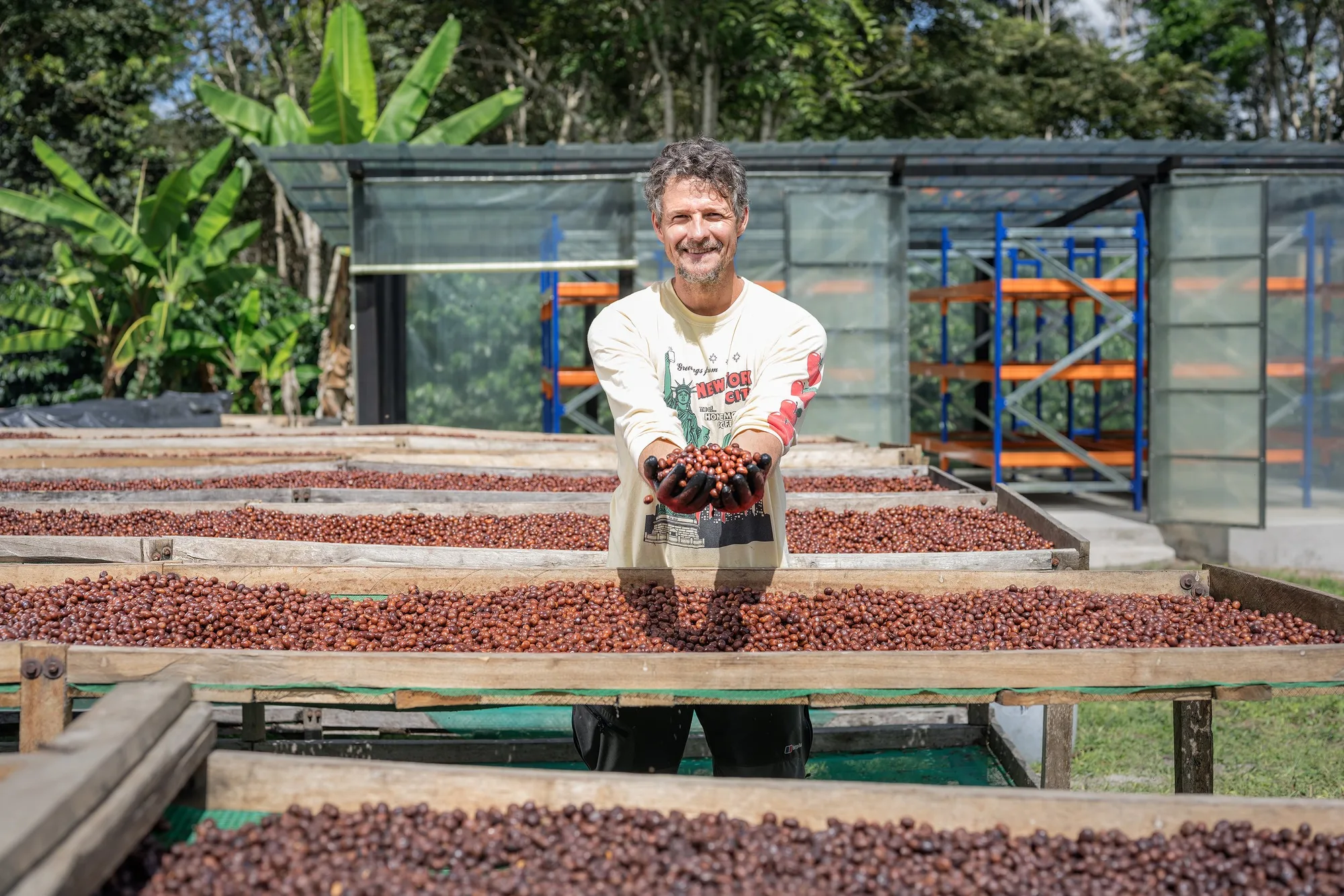
Wave philosophy
Also known as: Wave Process
From Pepe: Wave involves an oxidative step to facilitate esthers, which are natural precursors of flavor development. They last about 24hrs, so timing is critical to preserve them and move to a cold room to settle them into the beans in the drying phase.
Where it’s found: Finca Soledad by Pepe Jijon in Ecuador
Rarity: Rare
Common varietal associations: Gesha, sidra, typica mejorado
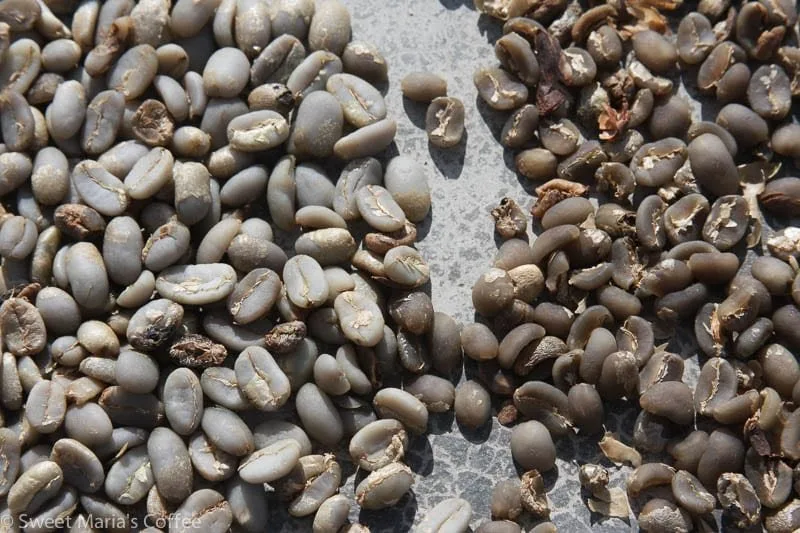
Wet-hulled
Also known as: Giling Basah, semi-washed, Sumatra Process
Coffee is usually dried before the final hull layer (called parchment) is removed at a mill. Wet-hulling removes the parchment while in a moist state. While more difficult to remove moist skin than dried, flaky skin, the time savings to not have to wait more days for drying increases volume throughput.
Where it’s found: Primarily, Indonesia, though uncommon but possible in other countries as well
Rarity: Very common globally, less so in specialty coffee
Common varietal associations: Aceh, ateng, jember, typica
Further reading: XLIII blog; Sweet Maria's
Robert’s opinion: Often earthy. Expect notes on the bag of tobacco. But that is perhaps as much to do as the region as it is the process itself.
Whisky-barrel
An infusion process where coffee is fermented in whisky barrels to impart flavor from the wood. Sometimes it is done by the coffee producer. The less optimistic version is a roaster DIY-ing this with a given green coffee.
Where it’s found: Nowhere in particular. Seen in Honduras, Vietnam
Rarity: Uncommon
Common varietal associations: None in particular
Robert’s opinion: Given it's a gimmicky tool possibly used to mask low grade coffee, I'd have trouble suggesting this. The stuff made by intent by a coffee producer seems to be significantly less than what a low-mid grade roaster is applying in an attempt to upsell something.
Wine hydration
I haven't found any information about this process, but obviously some wine was involved. The unroasted beans look concerningly close to their post-roast state.
Where it’s found: Winemaker in Taiwan, seemingly having processed Colombian greens
Rarity: Rare, I received 3 samples and haven't seen them since.
Common varietal associations: castillo, caturra, colombia, it doesn't really matter considering how overpowering the process is
Robert’s opinion: A top 3 overpowering process. When sharing, I labeled the bag "Hangover". Frankly, I'm uncertain on the food safety being done on this.
XO process
An extended natural fermentation where bags of cherries are rotated every 5hrs, followed by slow, controlled drying.
Where it’s found: Cafe Grana La Esperanza (CGLE) in Colombia, specifically their Potosi and La Esperanza farms.
Rarity: Rare, expensive
Common varietal associations: None in particular
Robert’s opinion: One of the stronger funk processes I can think of. Uniquely, it intentionally presents alcohol and you'll find flavor notes of the specific liquors it evokes. Also expect tropical fruits, chocolate, dark red fruits. Due to the labor and attention involved, beans of this process may be on the pricier side.
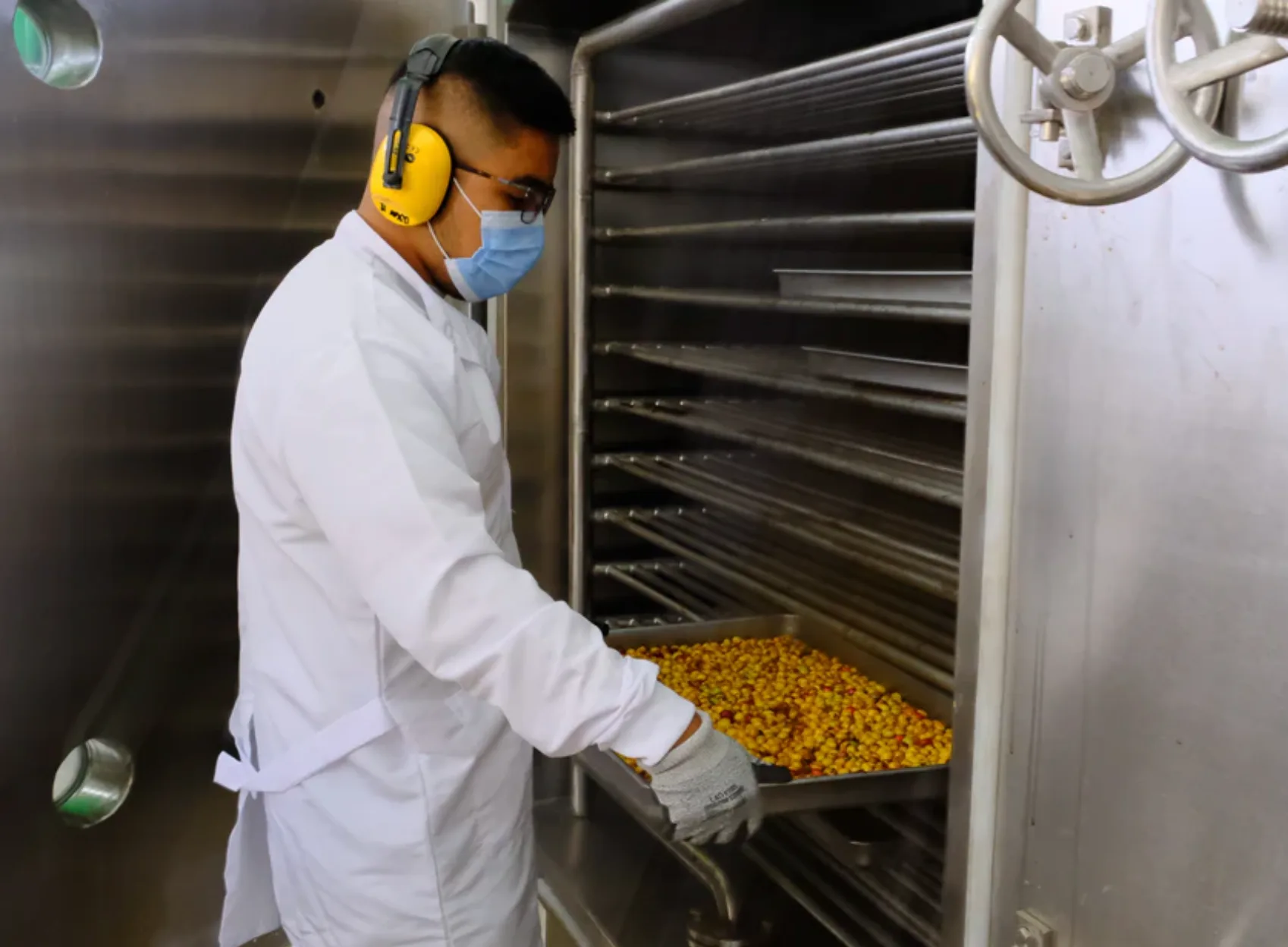
Zeolite
Also known as: Zeo
Zeolite is a mineral structure used as a desiccant to absorb moisture and accelerate the drying process.
Where it’s found: Finca Paraiso and Project Hachi, both by Diego Bermudez
Rarity: Rare, as it is a materially expensive process. It seems to have diminished in production since its introduction around 2023.
Common varietal associations: gesha, pink bourbon
Robert’s opinion: What comes to mind is a synthetically clean florality paired with juicy citric qualities like grapefruit or mandarin oranges, I'm thinking soap without the alkaline bitterness. The original marketing material emphasized how rapid drying potential, but it is unclear how desirable that is compared to the subsequently glorified trend of slow, controlled drying approaches.